Why Connecting Your Risk Mapping to TPRM Is a Game Changer
In a context where third-party ecosystems are expanding, organizations can no longer afford to manage their vendor relationships blindly. Companies are now selecting partners based on increasingly specific criteria, and many have implemented risk mapping tools to gain a clearer view of the risks posed by their subcontractors. They must actively manage third-party risks.
According to the OBSAR 2022 barometer, 46% of French companies now have a formalized risk map (compared to only 9% in 2020). Yet, the French Anti-Corruption Agency highlights that most organizations still struggle to structure effective third-party evaluation processes and to deploy a proportionate risk-based approach.
This raises a key question: why such a gap between the existence of risk mapping tools and their operational application? And more importantly: how can this gap be effectively bridged?
Risk Mapping: An Essential But Often Underutilized Tool
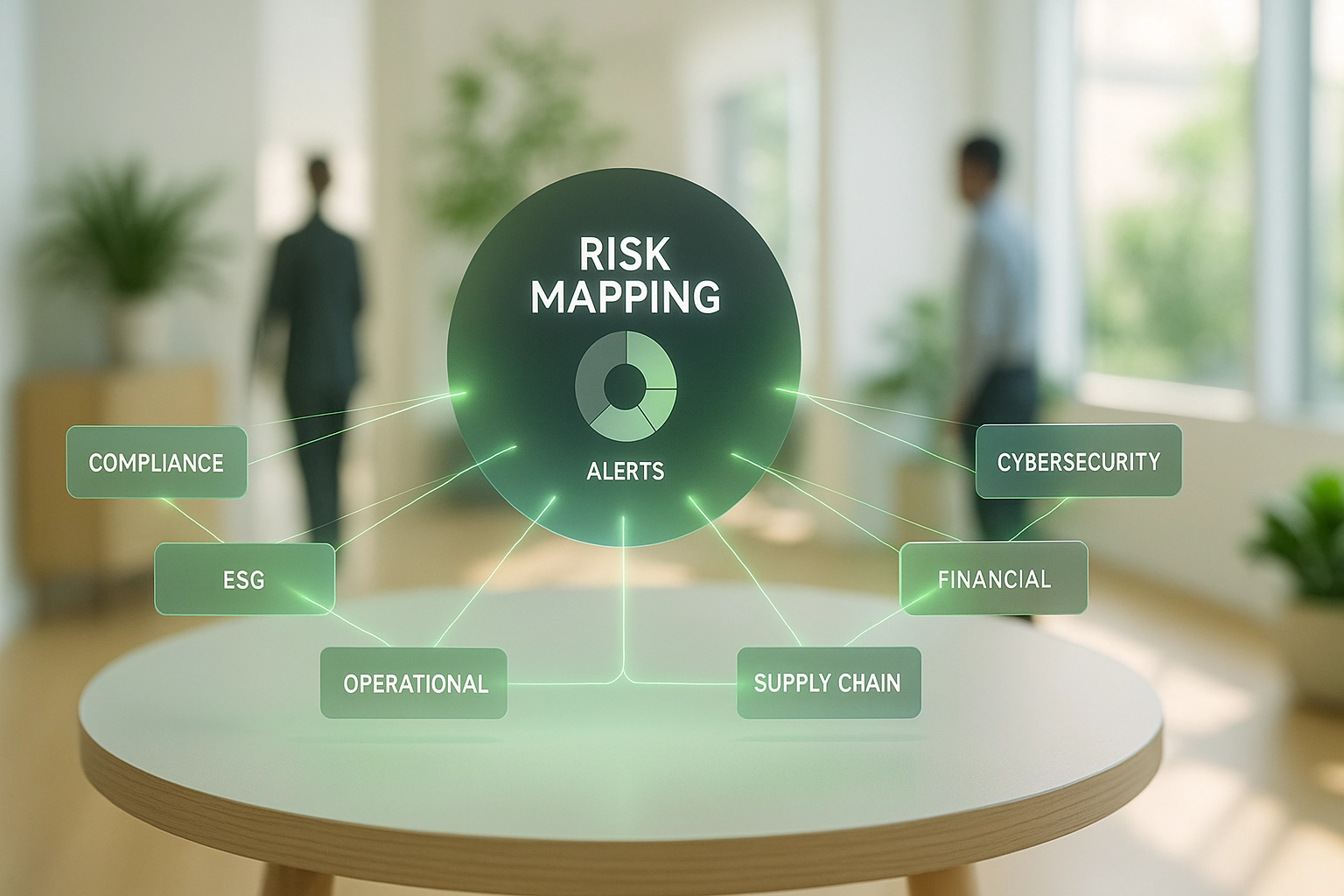
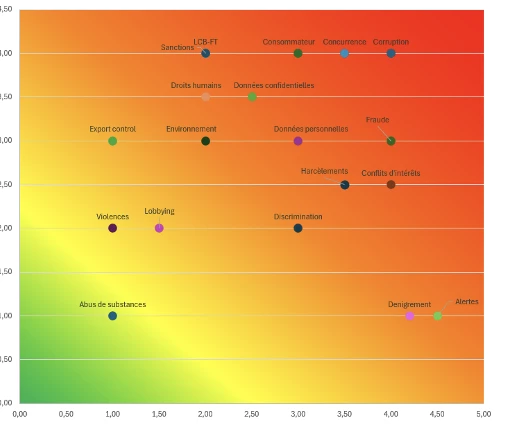
Third-party risk mapping aims to identify, classify, and prioritize threats that may impact the organization: corruption, cybersecurity, human rights violations, regulatory non-compliance, economic dependency… The risks are numerous and often interlinked.
In practice, however, many companies fail to unlock the full potential of this tool. Common obstacles include lack of awareness, perceived complexity, limited resources, or the difficulty of integrating it into day-to-day operations. As a result, risk maps are too often treated as static, one-off exercises—disconnected from the field.
In the public sector, this challenge translates into difficulty in evaluating subcontractors against the requirements of public procurement. Local authorities must juggle compliance with SPASER and procurement procedures, often without the right tools to ensure effective third-party governance.
The key: keep it simple. Start with accessible data and adopt a complete, actionable methodology for third-party risk mapping.
TPRM: The Missing Link to Activate Your Risk Map
This is precisely where TPRM (Third-Party Risk Management) comes into play. It doesn’t replace your risk map—it activates it.
TPRM helps orchestrate proportionate evaluation workflows for third-party partners based on the risks identified in your mapping. With TPRM, you can:
- Adapt the level of due diligence according to risk factors (country, business activity, contract amount, data sensitivity…)
- Deploy targeted, dynamic questionnaires
- Automate reminders and updates
- Cross-reference internal data with external weak signals (media monitoring, sanctions lists, alerts…)
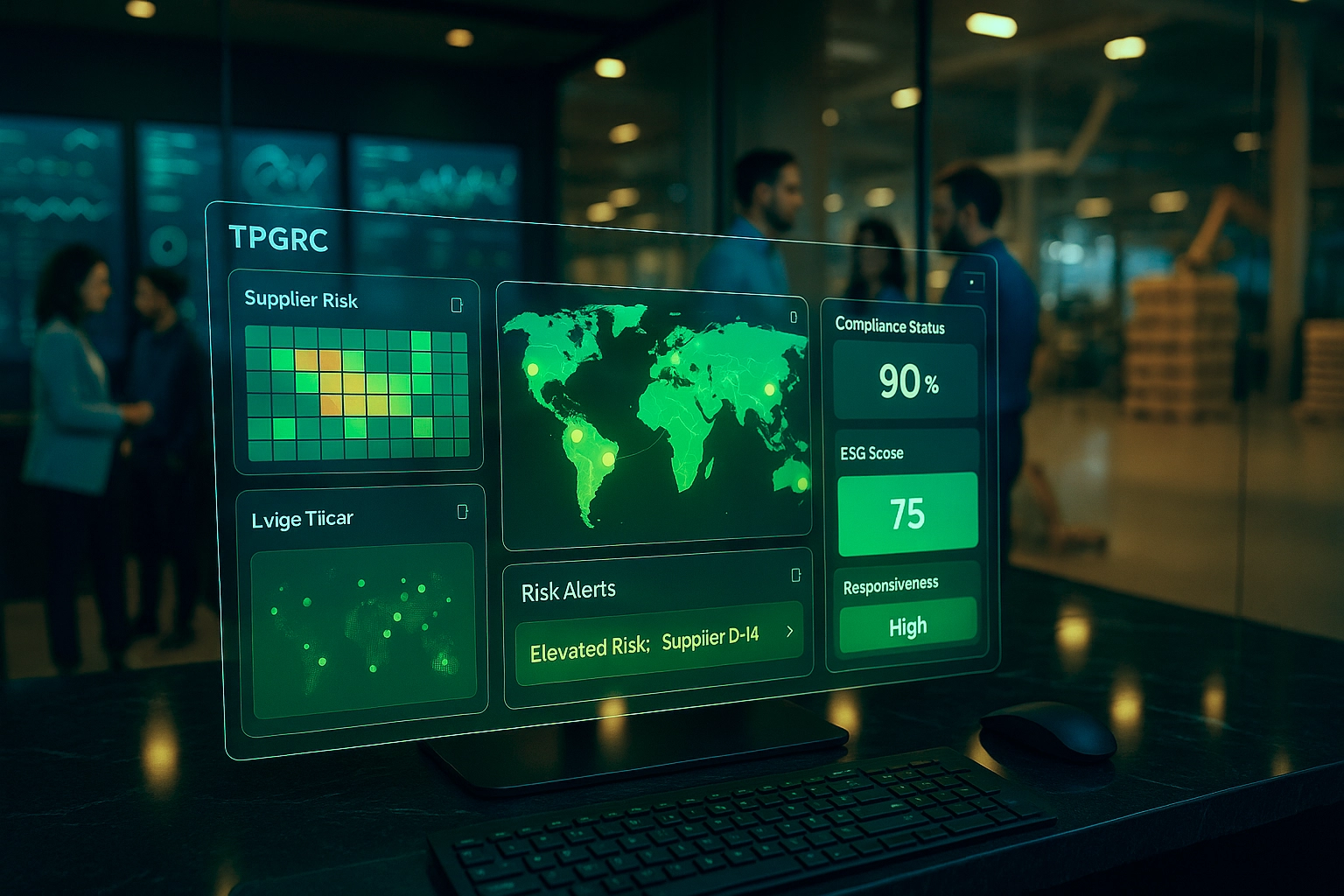
- Visualize results in actionable dashboards
In the construction sector, this approach enables better management of multi-level subcontracting. Major contractors can evaluate providers based on site compliance, required certifications, and HSE standards—while also complying with posted worker regulations. This dynamic governance is critical to meeting decarbonization goals and managing the carbon footprint of subcontractors, where environmental risk mapping must align with operational partner assessments.
Likewise, cyber risk mapping is no longer a static document. It becomes a true decision-making engine, integrated into your operations and continuously evolving. An indispensable tool—especially for industrial firms subject to ICPE regulations and growing third-party cybersecurity obligations.
A Virtuous Circle: Greater Agility, More Reliability, Less Burden
By connecting your supplier risk mapping to your TPRM system, you can:
- Improve accuracy in identifying high-risk third parties
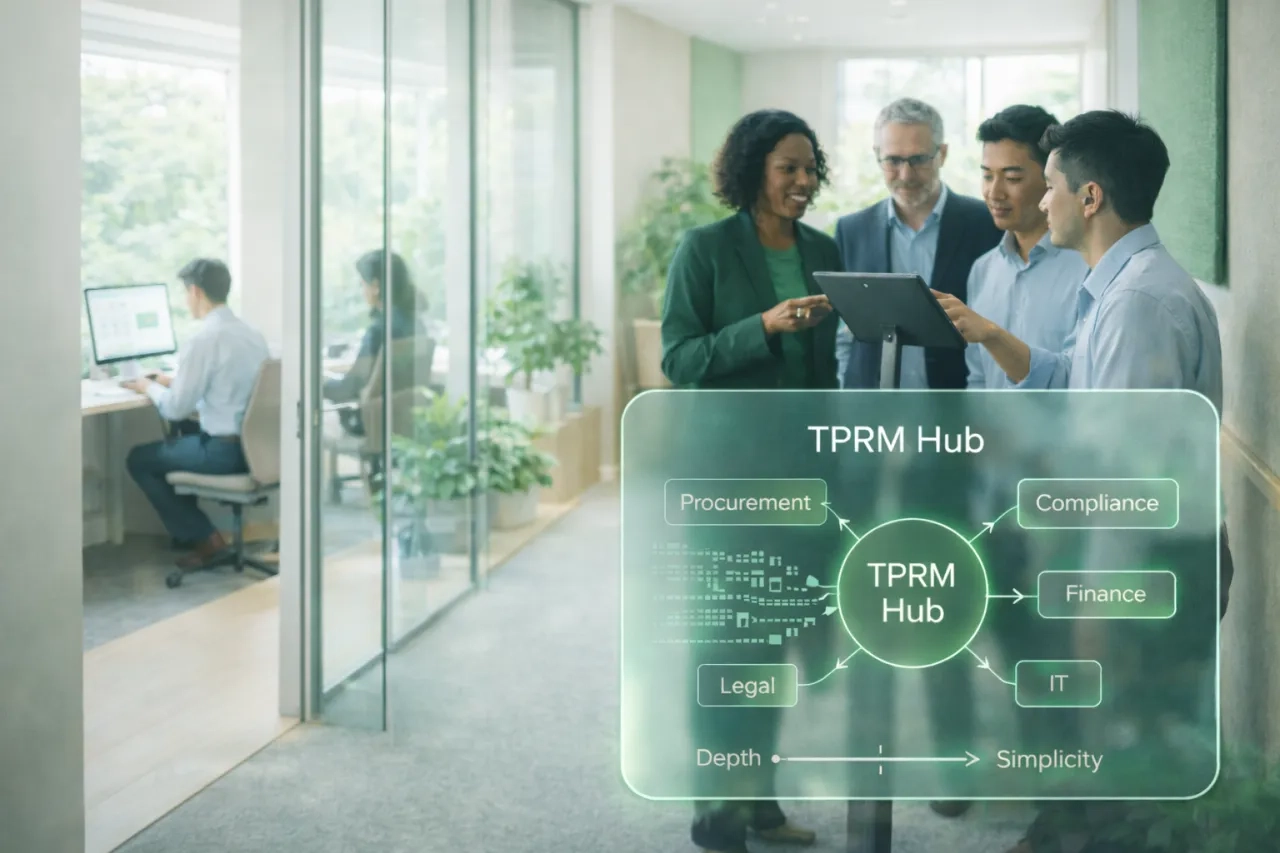
- Reduce the administrative burden on Procurement, Legal, and Compliance teams
- Increase responsiveness in the event of alerts or changes
- Strengthen your ability to demonstrate risk control in audits or inspections
It’s also a way to embed a risk culture deeper into operational teams—not just among compliance experts.
In the retail sector, this collaborative approach is especially valuable for managing the complexity of cross-border e-commerce. Retailers can evaluate marketplace partners against product compliance criteria, health and safety standards, and multi-country regulations—optimizing third-party risk oversight across distribution channels.
Toward Mature Third-Party Governance: The Evolution to TPGRC
The future of partner risk management lies in the evolution of TPRM to TPGRC (Third Party Governance & Risk Compliance). This transition enables organizations to fully integrate European regulatory frameworks such as DORA, NIS 2, and CSRD into a unified approach.
Third-party risk scoring becomes dynamic, adapting in real time to regulatory shifts and weak signals detected. This collaborative approach, based on secure data sharing, turns risk mapping into a true collective intelligence platform.
For industrial companies managing complex supply chains, this evolution enables them to anticipate disruptions while staying compliant with REACH and sector-specific standards.
Transforming a static risk map into operational intelligence is the real game changer: shifting from a checkbox exercise to a competitive advantage.
The connection between vulnerability analysis and TPRM is more than just technical optimization—it’s a shift from defensive compliance to proactive third-party governance. By turning risk data into actionable intelligence, you’re no longer reacting to disruptions—you’re anticipating and mastering them.
Discover how to move from TPRM to TPGRC and transform your approach to third-party risk management. Book a personalized demo to explore how to optimize your risk mapping.
-
 08 April 2025How to Assess the Financial Health of Your Third-Party PartnersSolutionsAssessing the financial health of third-party partners has become a crucial element in ensuring the operational resilience of your supply chain. According to the 2023 report from the Financial Stability Board, economic interdependencies have significantly increased in recent years—bringing flexibility and innovation but also creating potential risks for financial stability if not properly managed. Understanding […]
Read more
-
 03 March 2025Understanding Dynamic Risk Scoring: Fundamentals and Implementation for Third-Party GovernanceSolutionsDynamic risk scoring has become an essential tool for organizations seeking to optimize their third-party governancestrategies. With increasingly complex partnerships and growing regulatory requirements in Europe—particularly DORA and NIS 2—it is crucial to understand how this methodology transforms collaborative assessment of third-party partners. According to data reported by Sprinto, 58% of compliance teams identify assessing third-party responsiveness as their main challenge […]
Read more
-
 17 March 2025Optimize Your Supply Chain Monitoring with Dynamic and Customizable TPGRC DashboardsSolutionsEffectively Manage Supplier Risks with Real-Time Indicators The international context, new regulations, and expanding sourcing are pushing Procurement and Purchasing Departments to simplify supplier relationship monitoring. These evolutions require real-time management of the many supplier-related data points and compliance requirements. In an environment marked by tighter regulations and greater demand for transparency, the statuses, scores, […]
Read more
-
 22 January 2026TPRM silos: how to break down barriersSolutionsQuick answer: TPRM silos fragment third-party governance across Procurement, Legal, Compliance, Finance, and IT, which increases duplicate work and slows risk decisions. A TPRM platform can centralise supplier data into a single system of record and help teams run collaborative assessments. In large deployments, this approach has been associated with 25% administrative time saved (about […]
Read more