European All-in-One TPRM Approach: GDPR, NIS2, DORA & CSRD
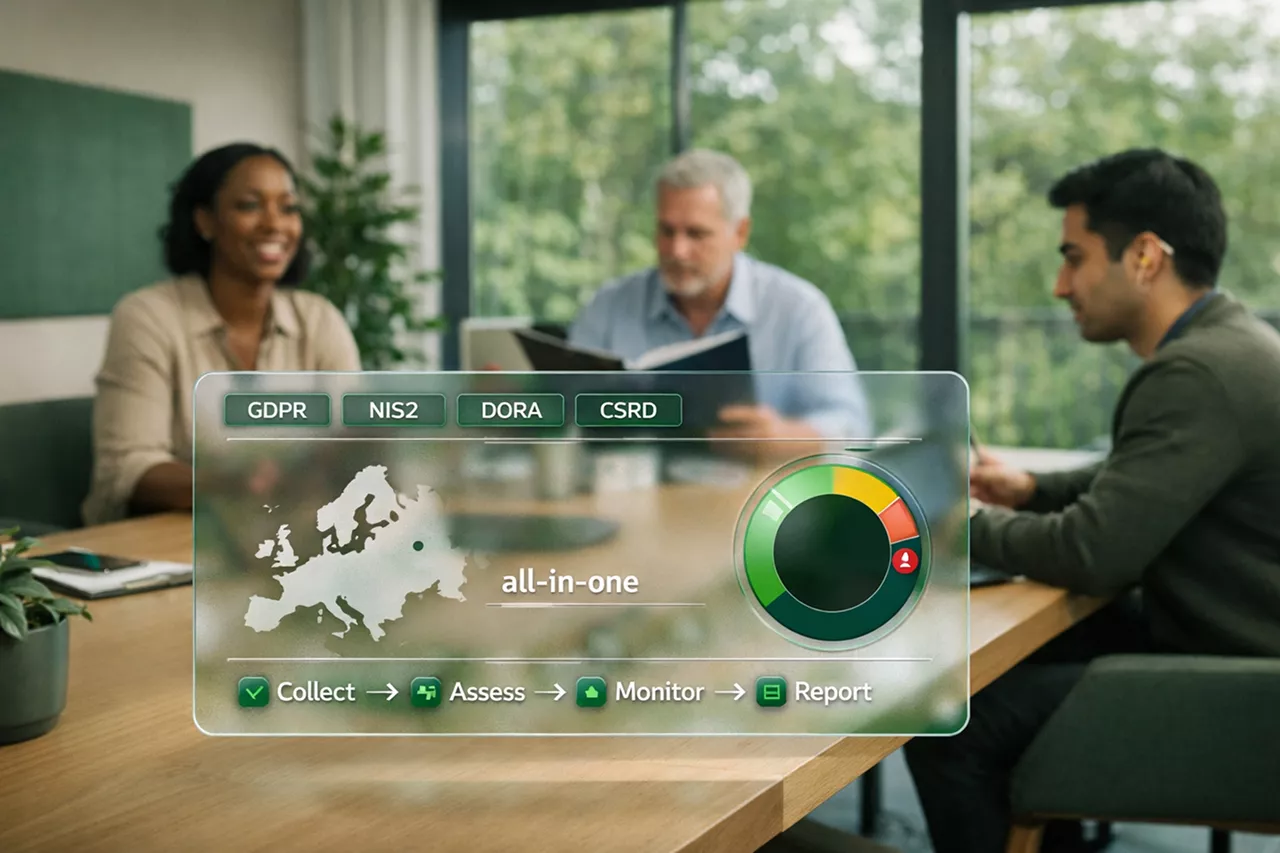
European TPRM: Third-Party Risk Management (TPRM) has become a key priority for European businesses. Increasing regulatory demands, growing reliance on critical suppliers, and the surge in cyber incidents place third parties at the center of risk management. In this context, an all-in-one European TPRM approach addresses specific constraints that generic solutions often fail to meet.
Key Takeaways
A Response to the Specific Challenges of the European Market
The European market is defined by significant regulatory, cultural, and sectoral diversity. Companies must navigate demanding frameworks for data protection, cybersecurity, operational resilience, and financial compliance.
GDPR imposes strict obligations on the handling and movement of personal data. NIS2 significantly expands the scope of affected entities, covering 18 sectors and increasing governance and cyber risk management requirements (ANSSI, 2024). In the financial sector, DORA harmonizes digital risk management and puts ICT providers at the center of regulatory oversight starting in 2025 (ESMA, 2025).
At the same time, incidents remain frequent. European reports show that public administrations and the transport sector are among the most affected by major cyber events (ENISA, 2024). A large share of these risks is directly or indirectly linked to third parties.
In this context, a TPRM solution designed for the European market must integrate these constraints from the outset, rather than handling them in a fragmented manner.
An All-in-One TPRM to Centralize and Simplify Third-Party Risk Management
Centralized Data and Risk Assessments
Third-party risk management relies on a wide range of data: due diligence questionnaires, certifications, audits, contracts, incident reports, external data, and remediation plans. When this information is scattered across tools or teams, the resulting risk visibility is partial and difficult to act upon.
An all-in-one approach centralizes this data into a single repository. Teams can then track third-party compliance status, identify critical suppliers, compare risk levels, and document decisions. This centralization improves traceability—essential for audits and regulatory reviews—and reduces the risk of errors or omissions.
Process Automation for Greater Efficiency
TPRM processes often rely on manual exchanges and unstructured tools, making them time-consuming. Automation plays a key role in streamlining these workflows.
Automated workflows simplify sending and tracking questionnaires, issuing reminders, collecting documents, and generating reports. This allows teams to focus more on risk analysis and prioritization of corrective actions—saving up to 25% of administrative time.
Configurable evaluation and scoring models ensure consistent criteria aligned with European regulations and sector-specific requirements, improving the consistency of assessments.
Regulatory Compliance & Security: Built-In Requirements
Alignment with European Regulatory Frameworks
In Europe, compliance structures internal processes and third-party relationships. An effective TPRM system links regulatory requirements (GDPR, NIS2, DORA, ISO standards) with concrete controls and supporting evidence.
Companies must be able to demonstrate due diligence, especially in:
Regularly updating internal frameworks is critical in a constantly evolving regulatory environment.
Data Protection and Cybersecurity
Managing third-party risks involves handling sensitive information. Data and access security are essential prerequisites.
In France, regulatory authorities issued dozens of sanctions in 2024, totaling over €50 million in fines (CNIL, 2025 – 2024 report). A structured TPRM solution helps secure access, protect exchanges, and retain verifiable audit trails in the event of an incident or review.
This discipline helps build trust between companies and their partners.
A Collaborative Approach Suited to European Realities
Third-party risk management also requires close collaboration between internal teams (procurement, compliance, legal, IT), suppliers, and, in some cases, auditors or regulators.
In a multilingual and multicultural European context, the ability to structure communication and share information clearly is crucial. Shared workflows and standardized formats help accelerate data collection and improve quality.
Flexibility & Customization by Company Size and Sector
European companies range from SMEs to large organizations across finance, healthcare, industry, and public sectors. TPRM maturity levels and risk exposure vary significantly.
A modular approach enables companies to tailor the system to their priorities:
This flexibility ensures a proportionate solution aligned with overall strategy and operational constraints.
Structuring Third-Party Risk Management in Europe for the Long Term
Adopting a European all-in-one TPRM approach is a strategic decision for organizations facing rising regulatory pressure and increasing third-party dependencies. By centralizing data, automating processes, and embedding compliance from day one, companies strengthen their ability to control risk and prove compliance.
For organizations looking to implement a TPRM system aligned with European requirements, Aprovall offers a pragmatic and scalable approach to support this transformation.
-
 14 July 2024Duty of vigilance: A recent international report warns of companies’ non-compliance, particularly in FranceSolutionsThe World Benchmarking Alliancehas just published a report analyzing the practices of the 2,000 most important companies on the planet in terms of human rights due diligence. The “alarming” results show companies’ delay in this area, and French companies are far from being an exception to the rule. The countdown has begun before the European […]
Read more
-
 21 April 2025NIS2: Understanding the Obligations of Critical SuppliersSolutionsThe NIS2 Directive redefines cybersecurity requirements for critical entities and their third-party governance across Europe. With over 1.8 million companies indirectly affected via their supply chains (NIS2 Quality Mark – 2025), identifying critical third parties is now a strategic imperative for key sectors like construction and public services. This regulation mandates a dynamic mapping of […]
Read more
-
 11 February 2025NIS 2 Directive and Critical Third Parties: A Must-Read Guide for CompaniesSolutionsIdentifying and evaluating critical third parties is becoming a key challenge with the NIS 2 Directive, which is reshaping strategic partner governance across Europe. This regulatory shift, affecting approximately 300,000 institutions, redefines collaborative evaluation requirements for third parties in critical sectors such as construction, industry, retail, and the public sector. At the heart of this transformation […]
Read more
-
 19 March 2025Digital Transformation and Third-Party Governance: A New Era for Risk ManagementSolutionsDigital transformation is profoundly redefining the way organizations manage their relationships with third-party partners. In this rapidly evolving context, third-party governance is taking on a crucial strategic role, moving from simple document collection to collaborative compliance assessment. This shift is part of a broader movement toward Third Party Governance and Risk & Compliance (TPGRC), which […]
Read more