TPRM silos: how to break down barriers
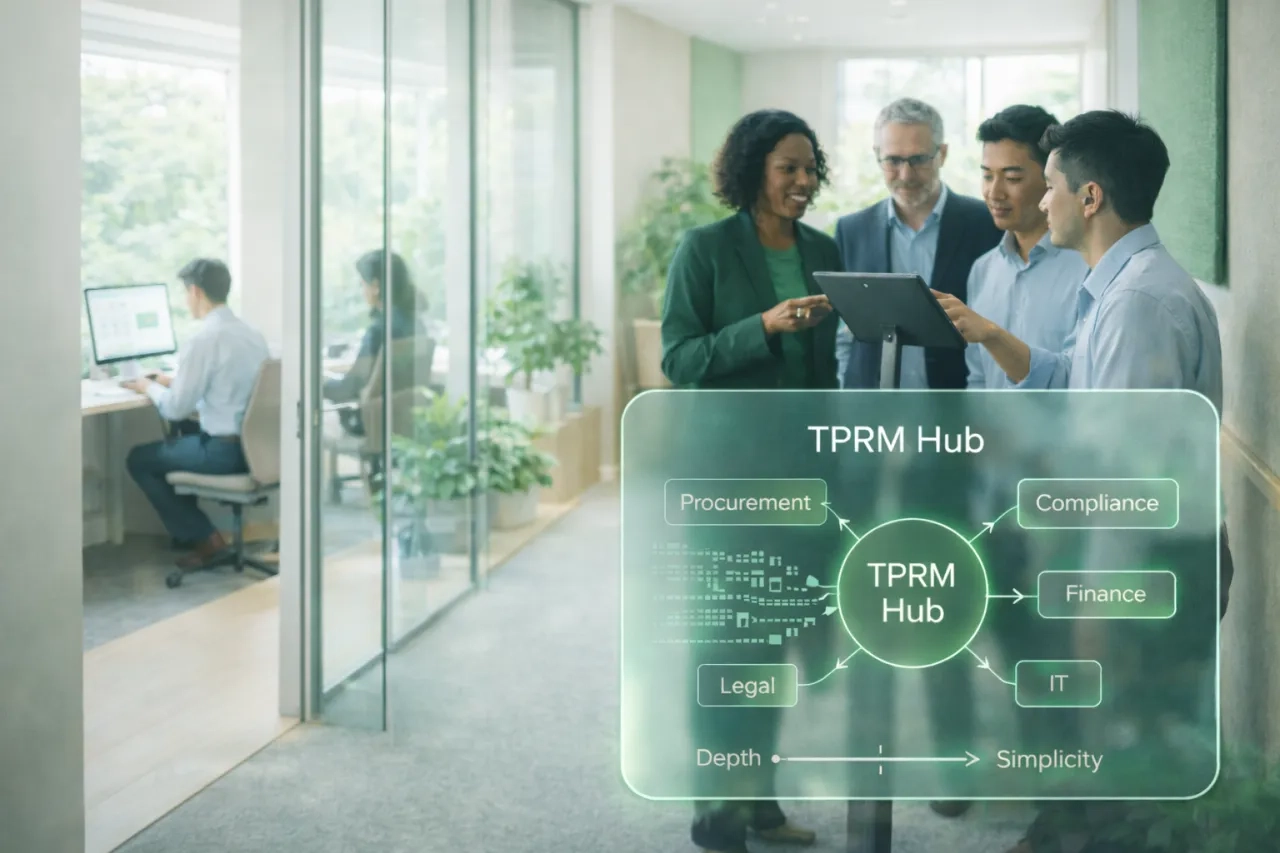
Quick answer: TPRM silos fragment third-party governance across Procurement, Legal, Compliance, Finance, and IT, which increases duplicate work and slows risk decisions. A TPRM platform can centralise supplier data into a single system of record and help teams run collaborative assessments. In large deployments, this approach has been associated with 25% administrative time saved (about 9 days per month) by removing redundant tasks.
TPRM silos are no longer sustainable
TPRM silos happen when teams manage supplier onboarding and third-party risk with separate tools, separate data, and separate decision paths. Procurement, Legal, Compliance, Finance, and IT can each hold a partial view of the same third party. The result is often duplicated questionnaires, delays, and unclear accountability.
The context has changed. Regulatory and operational pressure has increased, and many organisations now need faster, more traceable decisions on third parties. In that environment, silos are not only inefficient, they create blind spots.
According to McKinsey Global Institute, better internal collaboration tools can improve knowledge-worker productivity by 20–25% (The Social Economy, 2012).
To keep in mind
The year 2026 clearly reflects this acceleration of risk.
Companies must continue to operate, deliver, produce, and innovate in a more constrained, volatile, and demanding environment. In this context, organisational silos increase exposure to supplier disruption, cyber incidents, and compliance gaps.
Mental overload is a common symptom of TPRM silos
When third-party information is scattered, teams spend time chasing context instead of analysing risk. People re-check documents that already exist elsewhere, ask suppliers for the same evidence multiple times, and wait on internal approvals because decision histories are fragmented.
This creates mental load and slows the work that matters. In practice, reducing duplication is one of the fastest ways to restore focus and velocity in third-party governance.
Benefit
When third-party governance is centralised, organisations can reduce duplicate supplier requests, reduce supplier fatigue, and speed up cross-functional approvals. In large deployments, this has been associated with
25% administrative time saved
+30% average improvement in supplier response rate
9 day saved per month
Supplier risk management makes silos visible
Supplier risk management is one of the clearest examples of silos at work.
Procurement may assess commercial value.
Legal may focus on contractual risk.
Compliance may track obligations and audit readiness.
Finance may assess solvency.
IT security may assess third-party cyber risk.
If these streams are not connected, a supplier can be approved commercially while still presenting a significant regulatory, ethical, or cybersecurity risk.
Want a practical checklist to reduce TPRM silos?
Discover how cross-functional third-party governance can reduce duplication and supplier fatigue, and improve audit readiness.
How TPRM breaks down silos (mechanisms that work)
TPRM helps break down silos when it is implemented as third-party governance, not as a documentation repository.
Create a single system of record for supplier information
A shared system of record reduces rework and disputes about which information is current. It also makes it easier to scale supplier onboarding without increasing supplier fatigue.
Use collaborative assessment instead of isolated audits
A collaborative assessment approach allows each function to contribute the part it owns while reusing shared evidence. This reduces repeated requests to suppliers and makes decision-making more transparent.
Make responsibilities explicit with cross-functional workflows
Clear workflows establish who acts when, what evidence is required, and what “done” means. This turns supplier risk decisions into an operational process rather than a chain of emails.
Where platforms like Aprovall fit (evidence-based)
Aprovall is a European TPRM platform that centralises third-party governance, risk, and compliance (TPGRC) across the full third-party lifecycle.
In large deployments, centralising third-party governance has been associated with 25% administrative time saved and the equivalent of 9 days saved per month, by eliminating redundant tasks and streamlining cross-departmental workflows.
Conclusion
TPRM silos are best addressed by treating third-party governance as a shared operating model.
- TPRM strengthens operational resilience by improving traceability and decision speed across departments.
- TPRM reduces fragmentation by centralising third-party information in a single system of record.
- TPRM supports cross-functional collaboration through structured workflows and collaborative assessments.
Definition
TPRM (Third-Party Risk Management) is the structured governance of risks across the full third-party lifecycle, from supplier onboarding to ongoing monitoring. In practice, TPRM aligns Procurement, Legal, Compliance, Finance, and IT security around shared requirements and a shared evidence base.
Do you have a question?
We have an answer.
TPRM silos are organisational splits where Procurement, Legal, Compliance, Finance, and IT security manage third-party risk with separate tools, separate data, and separate decision paths. This fragmentation increases duplicate supplier requests, slows approvals, and creates blind spots.
A TPRM platform helps when it centralises supplier information into a single system of record and structures cross-functional workflows. This makes responsibilities explicit, supports collaborative assessments, and improves traceability for audits.
In most organisations, third-party governance involves Procurement, Legal, Compliance, Finance, and IT security. The right operating model depends on the sector and regulatory environment, but the goal is consistent: each function contributes its expertise while reusing shared evidence.
Often, yes. Regulations such as NIS2 (cybersecurity) and DORA (operational resilience in financial services) increase expectations around third-party oversight, traceability, and ongoing monitoring. When third-party information is split across teams, it is harder to demonstrate consistent controls.
-
 16 May 2025Why Assessing Upstream Suppliers Is EssentialSolutionsUpper-Tier Suppliers: The (Too Often) Overlooked Risk in Your Supply Chain Modern procurement chains rely on a multitude of actors, each contributing to value creation—extraction, manufacturing, assembly… The final product is never the result of a single supplier but rather the outcome of an often international ecosystem. Yet, most organizations still focus their efforts and […]
Read more
-
 13 April 2025Automated Financial Scoring: Optimizing Third-Party AssessmentSolutionsIn today’s world of interconnected supply chains, businesses can no longer afford to manage their supplier relationships blindly. A partner’s financial health can quickly become a critical risk factor. This is precisely the view of procurement leaders, who rank the risk of third-party financial failure as their number one concern, according to the AgileBuyer study. […]
Read more
-
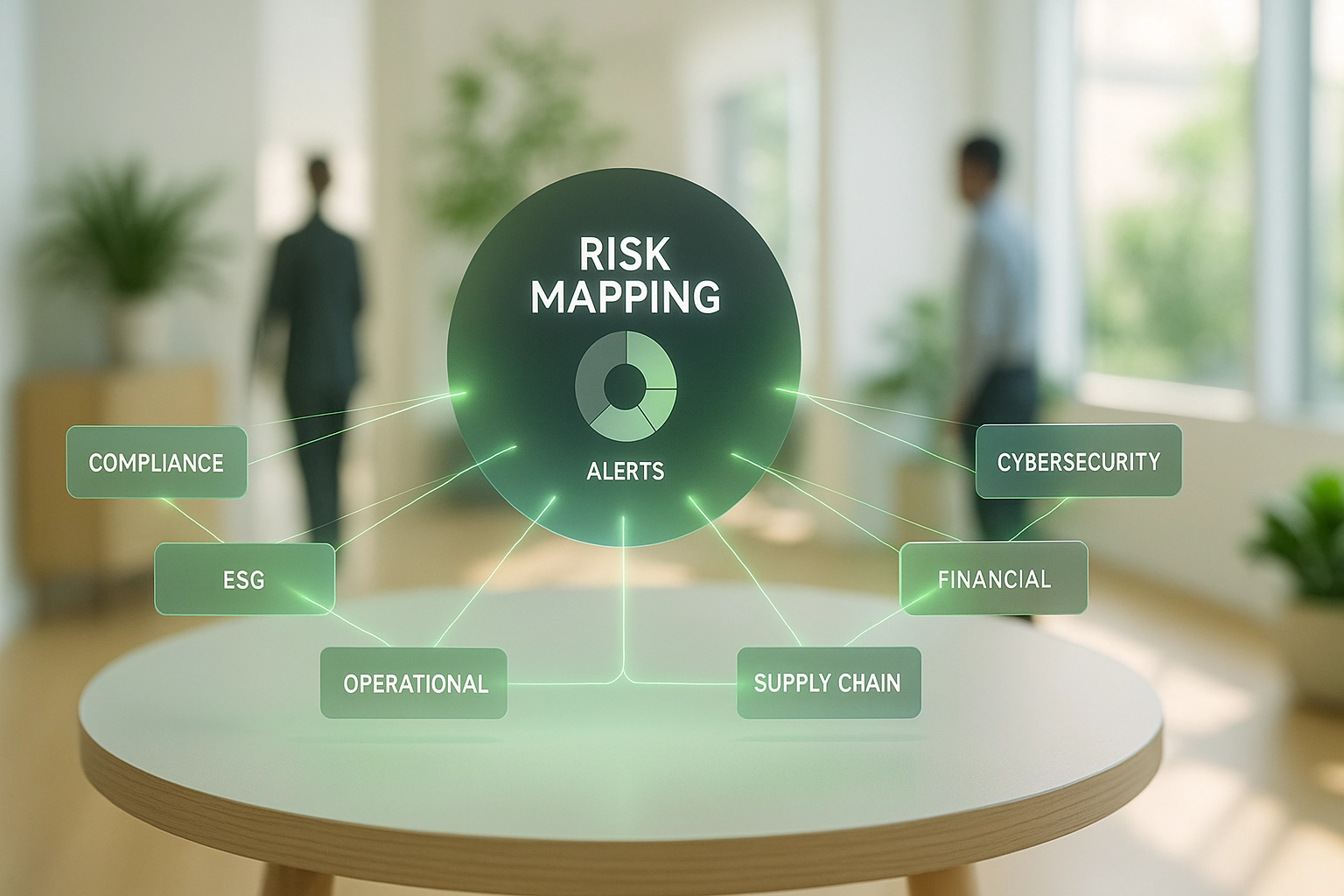 18 July 2025Why Connecting Your Risk Mapping to TPRM Is a Game ChangerSolutionsIn a context where third-party ecosystems are expanding, organizations can no longer afford to manage their vendor relationships blindly. Companies are now selecting partners based on increasingly specific criteria, and many have implemented risk mapping tools to gain a clearer view of the risks posed by their subcontractors. They must actively manage third-party risks. According […]
Read more
-
 17 December 2025How TPRM Maximizes the Management of Class C SuppliersSolutionsThe Class C Supplier Paradox In most organizations, the management of Class C suppliers is built on a well-known paradox: they represent only about 20% of total procurement spend, but consume nearly 80% of the procurement team’s time. These suppliers, often non-strategic and outside of core production, generate a high volume of invoices, administrative tasks, […]
Read more