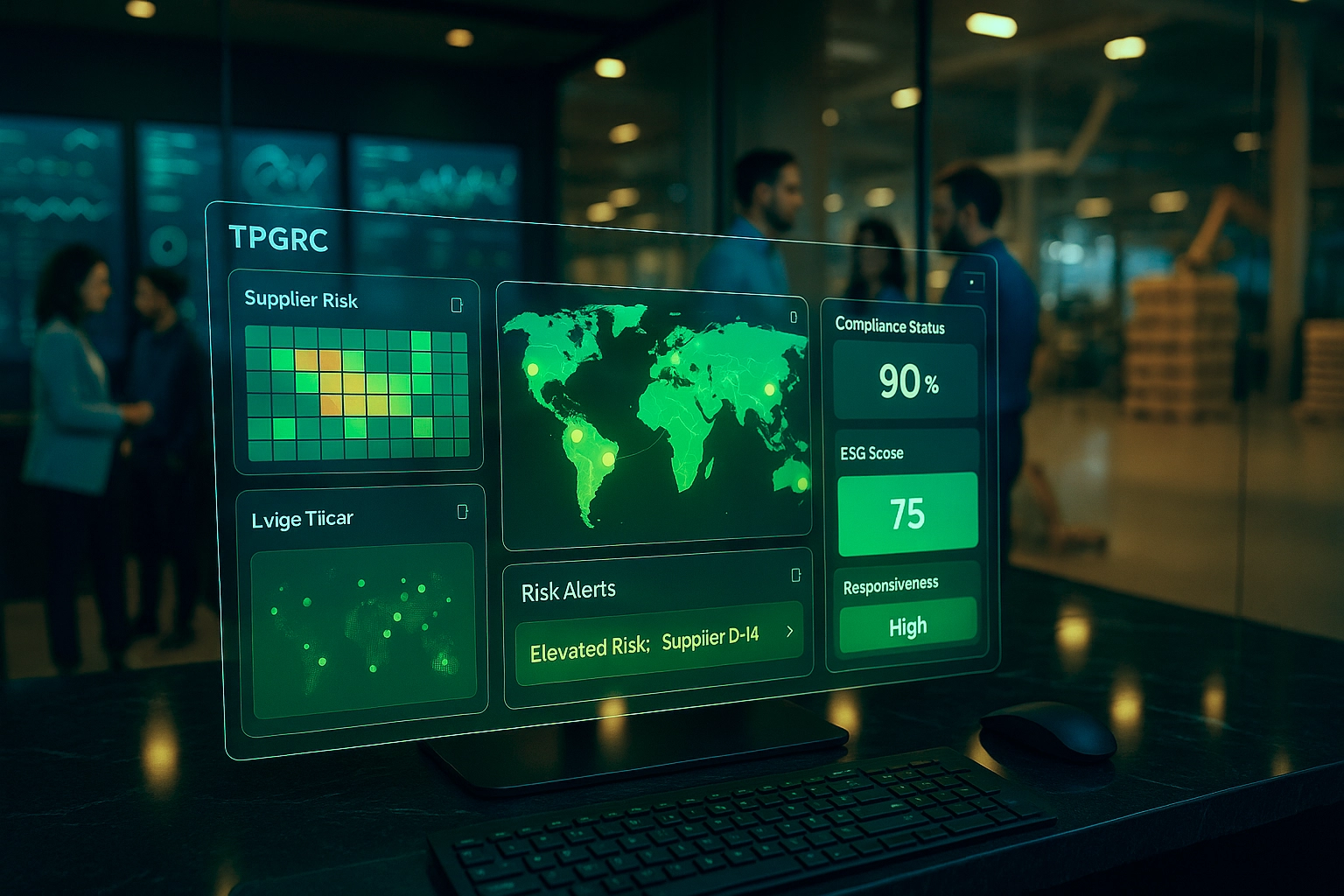
Understanding Dynamic Risk Scoring: Fundamentals and Implementation for Third-Party Governance

Dynamic risk scoring has become an essential tool for organizations seeking to optimize their third-party governancestrategies. With increasingly complex partnerships and growing regulatory requirements in Europe—particularly DORA and NIS 2—it is crucial to understand how this methodology transforms collaborative assessment of third-party partners.
According to data reported by Sprinto, 58% of compliance teams identify assessing third-party responsiveness as their main challenge in risk management. This issue is even more critical given that 61% of companies experienced a data breach or cybersecurity incident involving a third party in 2023—a 49% increase over the previous year.
In this context, dynamic risk scoring stands out as a vital approach for the 430,000 third parties managed worldwide on the Aprovall platform, enabling continuous, adjustable risk level evaluation while strengthening the operational resilience of partner ecosystems.
What is Dynamic Risk Scoring?
Dynamic risk scoring is defined as an advanced assessment method that uses real-time data and sophisticated analytical models to assign evolving risk scores to third-party partners. This methodology enables continuous collaborative assessment of risk levels, adapting to changes in the European economic, technological, and regulatory landscape.
Unlike traditional static methods, dynamic scoring continuously analyzes multiple parameters, enabling organizations to adjust their third-party governance according to detected developments. According to a MetricStream study, companies using dynamic scoring models can identify emerging third-party risks up to 63% faster.
In the industrial sector, for example, this strategy is particularly relevant for managing risks linked to suppliers of critical components. A manufacturing company can continuously assess the REACH compliance of its chemical partners and adjust procurement strategies based on system-generated alerts—thereby reinforcing operational resilience.
Difference from the Traditional Approach
Traditional third-party evaluation methods have several limitations that dynamic risk scoring overcomes.
| Characteristic | Traditional Method | Risk scoring dynamique |
|---|---|---|
| Evaluation Frequency | Periodic (annual/quarterly) | Continuous, real-time |
| Data Sources | Limited, mostly historical | Multiple, continuously updated |
| Adaptability | Rigid, fixed criteria | Flexible, auto-adjusted parameters |
| Responsiveness | Low capacity for rapid change detection | Immediate anomaly/trend detection |
| Customization | Standardized approach | Sector-specific adaptation |
According to ANSSI, “static assessment methods can no longer meet security requirements in an environment where threats constantly evolve.” This limitation is especially problematic under new European regulations like DORA and NIS 2.
In the construction sector, the difference is striking in multi-level subcontractor management. While the traditional approach only periodically evaluates direct subcontractors, dynamic risk scoring enables real-time monitoring across the entire subcontracting chain. For example, a major construction group can instantly detect when a tier-2 subcontractor loses a critical certification or faces legal action—and take preventive measures before the risk impacts the project.
Integrating artificial intelligence and machine learning into dynamic scoring systems also significantly improves assessment accuracy. A Gartner study shows that organizations using these advanced technologies for third-party risk assessment reduce the time needed to identify critical risks by 40%.
Thus, dynamic risk scoring represents a major step forward in third-party governance, enabling organizations to shift from reactive to proactive and collaborative risk management.
Want to transform your third-party evaluation approach?
Discover how the Aprovall360 platform enables efficient third-party governance with customized smart workflows.
Effective Implementation of Dynamic Risk Scoring
To implement a dynamic risk scoring system effectively within your third-party governance strategy, a well-structured methodology is essential. According to an AuditBoard study, organizations adopting dynamic risk assessment see significant productivity gains and improved detection of emerging risks within their partner ecosystems.
Key steps for successful implementation:
- Establish collaborative data dialogue – Engage jointly with third parties to identify and share relevant information (financial, operational, regulatory). For local authorities, this collaborative approach facilitates the integration of public procurement and certification data, enabling more accurate, mutually beneficial risk assessment.
- Define key risk indicators (KRIs) – Transform operational metrics into sector-specific risk indicators. As EY advises, “use available operational performance indicators and assign thresholds to convert them into actionable risk indicators.”
- Develop a tailored scoring model – Create a model that reflects your sector’s and partners’ specifics. In the public sector, for example, models must integrate reinforced GDPR compliance and procedural transparency requirements.
- Integrate with existing systems – Ensure compatibility with current third-party governance tools to facilitate adoption by teams.
- Train your teams – Educate staff on interpreting and using generated scores for informed decision-making.
Leveraging Advanced Technologies
The effectiveness of dynamic risk scoring relies heavily on integrating advanced technologies that enable continuous collaborative assessment of third parties.
Artificial Intelligence and Machine Learning
These form the core of modern dynamic scoring systems. According to Kodexolabs, “AI algorithms can process massive amounts of shared data, helping jointly identify subtle patterns and correlations that traditional methods would miss.” This is particularly valuable for fraud prevention and early anomaly detection in third-party behavior.
In the industrial sector, where supply chain complexity demands deep analysis, these technologies quickly flag documentary or transactional irregularities that could indicate non-compliance or fraud.
For example, in fraud prevention, a manufacturer and its chemical partners can use a shared AI platform to analyze REACH and ICPE compliance data in real time, pooling access to audit reports, certifications, regulatory alerts, and incident reports—identifying joint improvement opportunities and strengthening operational resilience.
Predictive Document Analysis
This is a major advancement in third-party governance. It automatically extracts relevant information from complex documents and detects anomalies or inconsistencies signaling potential risk.
In the retail sector, this is particularly useful for assessing global marketplaces. A large retailer can automatically analyze contracts, certifications, and regulatory documents from hundreds of third-party sellers—quickly identifying those at risk of non-compliance with sanitary standards or multi-country e-commerce regulations.
Customized Smart Workflows
Customized smart workflows are a major differentiator in implementing dynamic risk scoring. They automate evaluation processes and adapt workflows to sector specifics and detected risk levels.
ISACA recommends including not just risk probability and impact in workflows, but also velocity (how quickly an incident develops) and connectivity (interconnection between risks). This multidimensional approach is particularly relevant for emerging technologies and complex environments.
In the construction sector, where multi-level subcontractor management is challenging, a dynamic risk scoring system with smart workflows can automatically adjust documentation requirements and evaluation frequency according to each subcontractor’s risk level—while accounting for interdependencies between project stakeholders.
By combining these advanced technologies, organizations can shift from reactive to proactive and collaborative third-party evaluation, strengthening their operational resilience in an ever-changing economic and regulatory landscape.
Ready to strengthen your operational resilience?
Aprovall supports over 430,000 third parties in Europe in their transition to continuous collaborative assessment.
Toward More Mature Third-Party Governance
Dynamic risk scoring marks a major evolution in third-party governance, giving organizations the ability to move from reactive to proactive and collaborative risk assessment. By integrating real-time data, advanced technologies, and customized smart workflows, this methodology enables faster identification of emerging risks and timely strategy adjustments.
For priority sectors such as construction, industry, retail, and the public sector, this strategy offers significant benefits in operational resilience and efficiency. Continuous monitoring of the entire subcontracting chain, automatic compliance checks, and adaptable documentation requirements based on risk levels are major advantages in an increasingly complex landscape.
However, the implementation of dynamic risk scoring is only the first step toward achieving mature third-party governance. In our next article, we will explore how to maximize the impact of this method through continuous monitoring, the personalization of management strategies, and adaptation to new European regulatory challenges. We will also look at how the collaborative model helps reduce supplier fatigue while enhancing the quality of assessments, and how organizations can overcome challenges related to algorithmic bias and the ever-evolving regulatory landscape.
-
 16 May 2025Why Assessing Upstream Suppliers Is EssentialSolutionsUpper-Tier Suppliers: The (Too Often) Overlooked Risk in Your Supply Chain Modern procurement chains rely on a multitude of actors, each contributing to value creation—extraction, manufacturing, assembly… The final product is never the result of a single supplier but rather the outcome of an often international ecosystem. Yet, most organizations still focus their efforts and […]
Read more
-
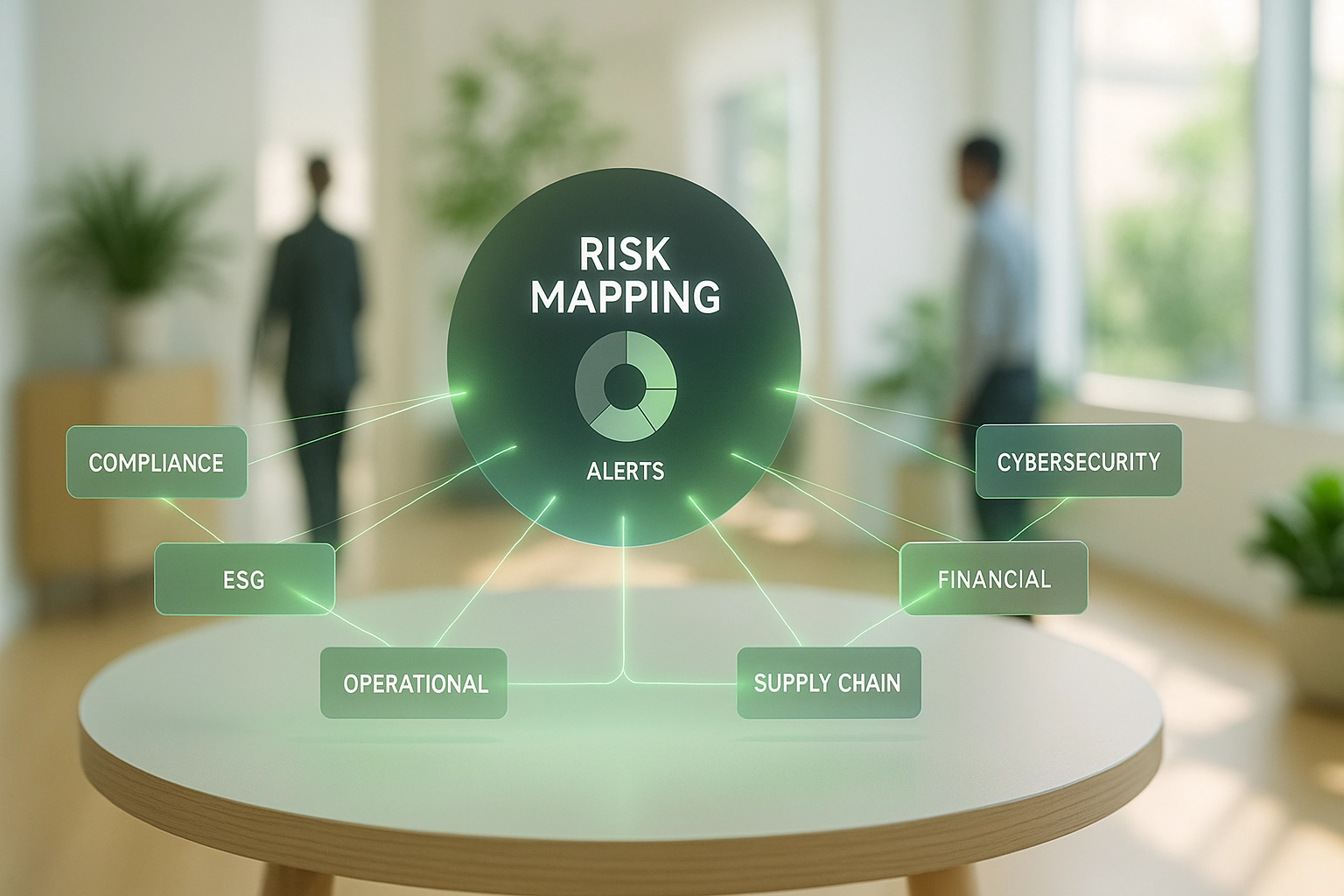 18 July 2025Why Connecting Your Risk Mapping to TPRM Is a Game ChangerSolutionsIn a context where third-party ecosystems are expanding, organizations can no longer afford to manage their vendor relationships blindly. Companies are now selecting partners based on increasingly specific criteria, and many have implemented risk mapping tools to gain a clearer view of the risks posed by their subcontractors. They must actively manage third-party risks. According […]
Read more
-
 05 March 2025Maximizing the Impact of Dynamic Risk Scoring: Monitoring and Personalization for Effective Third-Party Risk ManagementSolutionsIn our previous article, we explored the fundamentals of dynamic risk scoring and its essential role in evolving third-party governance practices. This innovative approach, leveraging real-time data and sophisticated analytical models, is profoundly transforming the way organizations assess their third-party partners. As European regulatory requirements tighten with DORA, NIS 2, and the convergence of CSRD/Duty of Vigilance, organizations must […]
Read more
-
 17 March 2025Optimize Your Supply Chain Monitoring with Dynamic and Customizable TPGRC DashboardsSolutionsEffectively Manage Supplier Risks with Real-Time Indicators The international context, new regulations, and expanding sourcing are pushing Procurement and Purchasing Departments to simplify supplier relationship monitoring. These evolutions require real-time management of the many supplier-related data points and compliance requirements. In an environment marked by tighter regulations and greater demand for transparency, the statuses, scores, […]
Read more