
Unified TPRM Platform for Procurement & Compliance Teams
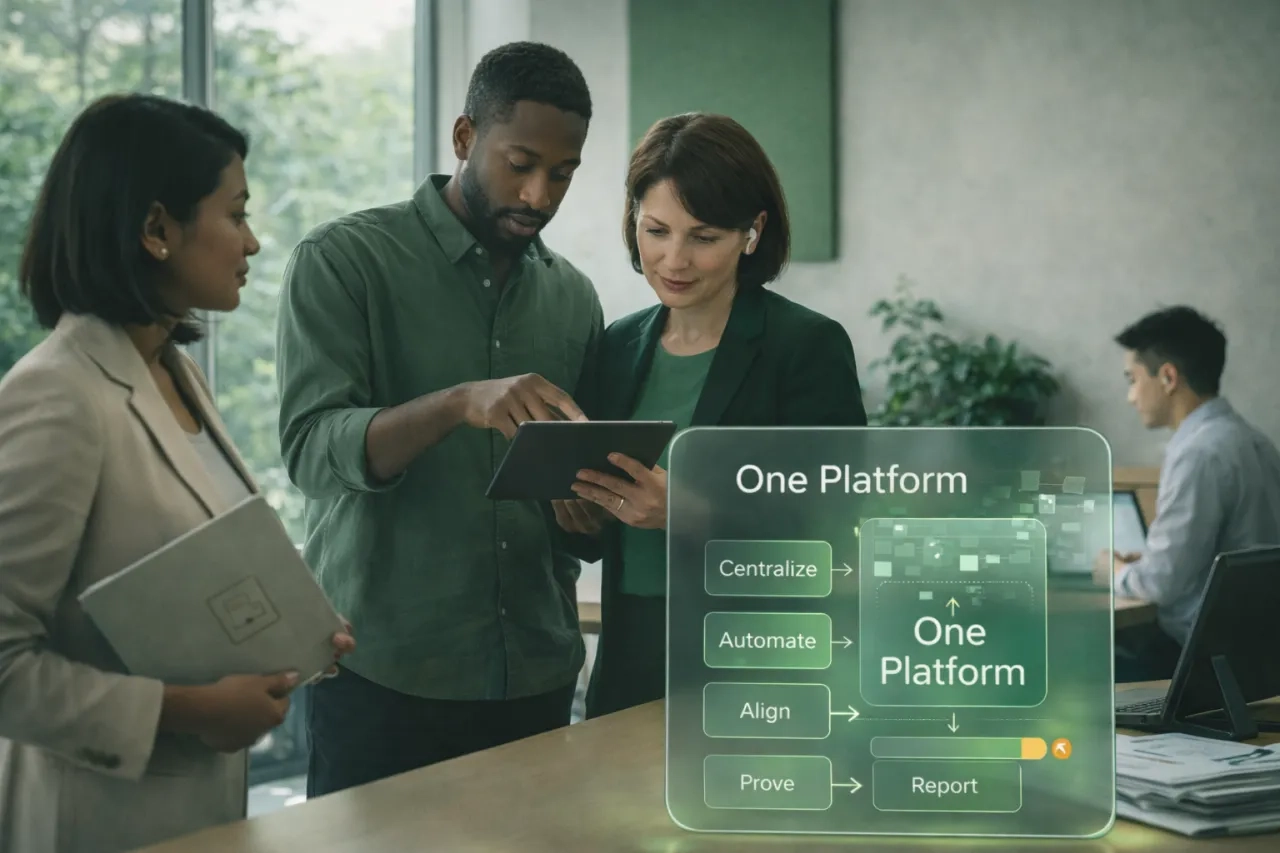
Procurement and Compliance teams face a common challenge: managing third-party risks efficiently while meeting increasingly stringent regulatory requirements. The growing number of suppliers, the complexity of compliance obligations, and the pressure to accelerate processes make this task especially demanding.
In this context, a unified TPRM (Third-Party Risk Management) platform helps structure third-party risk management and transforms it into a smoother, more coherent, and collaborative process.
Centralize Data for Clear & Actionable Visibility
Before implementing a unified TPRM platform, supplier information is often scattered across various tools, files, or databases. This fragmentation makes information access difficult, leads to duplicates, increases the risk of errors or omissions, and results in time-consuming manual tasks.
A unified TPRM platform automatically centralizes all third-party-related data: contractual information, due diligence questionnaires, audits, risk assessments, compliance documents, and interaction history. This centralization allows teams to:
By bringing all data into a shared repository, Procurement and Compliance teams can evaluate risks faster, identify critical suppliers, and make informed decisions without delays.
Automate Processes to Improve Operational Efficiency
Third-party risk management often still relies on manual, time-consuming processes that are difficult to sustain. Information gathering, supplier follow-ups, document updates, and audit preparation require significant resources.
A unified TPRM platform automates these repetitive and standardized tasks, including:
This automation shortens processing times, improves the quality of collected data, and reduces human error. Teams can then focus on risk analysis and prioritizing corrective actions, rather than administrative tasks.
Strengthen Collaboration Between Procurement & Compliance
In many organizations, Procurement and Compliance teams still work in silos, using separate tools and having different priorities. This disconnect complicates coordination and slows down validation processes.
A unified TPRM platform creates a shared workspace where all stakeholders access the same information and monitor evaluations in real-time. Collaborative features make it easier to:
This transparency improves communication, reduces unnecessary back-and-forth, and speeds up decision-making while ensuring greater consistency in third-party risk management.
Structure Proactive & Demonstrable Compliance
Compliance can no longer be treated as a one-off task. Companies must be able to demonstrate ongoing due diligence toward their third parties.
A unified TPRM platform helps structure this proactive approach by documenting performed controls, risk evaluations, and decision-making. It simplifies evidence retention for internal or external audits and helps build trust with regulatory authorities.
By integrating compliance into day-to-day operations, teams reduce exposure to legal risks and strengthen the organization’s credibility.
Enhance Visibility & Strategic Decision-Making
Beyond daily operations, a unified TPRM platform offers reporting tools and dashboards that summarize key third-party data. Procurement and Compliance teams can:
This visibility supports more strategic decision-making and enables organizations to anticipate risks instead of reacting to them.
Adapt to Different Organization Sizes & Industries
Third-party risk management needs vary widely depending on company size, sector, and maturity level. A unified TPRM platform must therefore be flexible and modular.
Being able to configure control levels, segment third parties by criticality, or adjust requirements per industry helps create a proportionate and effective framework. This approach avoids one-size-fits-all models and aligns TPRM with the organization’s real priorities.
A Strategic Enabler for Procurement & Compliance Teams
Adopting a unified TPRM platform is no longer just a tech choice — it’s a strategic move. By centralizing data, automating workflows, and boosting collaboration, it streamlines third-party risk management for Procurement and Compliance teams.
Beyond saving time, this approach enhances risk control, improves compliance, and supports better-informed decisions. In an environment where third-party dependencies are growing, TPRM becomes a critical pillar of business resilience and performance.
Do you have a question?
We have an answer.
-
 09 January 2026Why All-in-One TPRM Platforms Are Becoming Essential in EuropeTPRM&TPGRCEuropean companies increasingly rely on a complex network of partners and suppliers. Each new third party enriches this ecosystem but also increases risk. These risks include cyber threats, operational challenges such as financial or ethical risks, and regulatory requirements. Traditional, often fragmented, TPRM solutions are no longer sufficient. That’s why all-in-one TPRM platforms are gaining […]
Read more
-
 03 January 2026Who Needs an All-in-One TPRM Platform in Europe: SMEs to EnterprisesTPRM&TPGRCThird-party risk management (TPRM) has become a structural issue for European businesses of all sizes. IT outsourcing, industrial subcontracting, critical suppliers, service partners—every third-party relationship extends the value chain… and the risk surface. But given the variety of tools and approaches available, one question often arises: At what point does an all-in-one TPRM solution actually […]
Read more
-
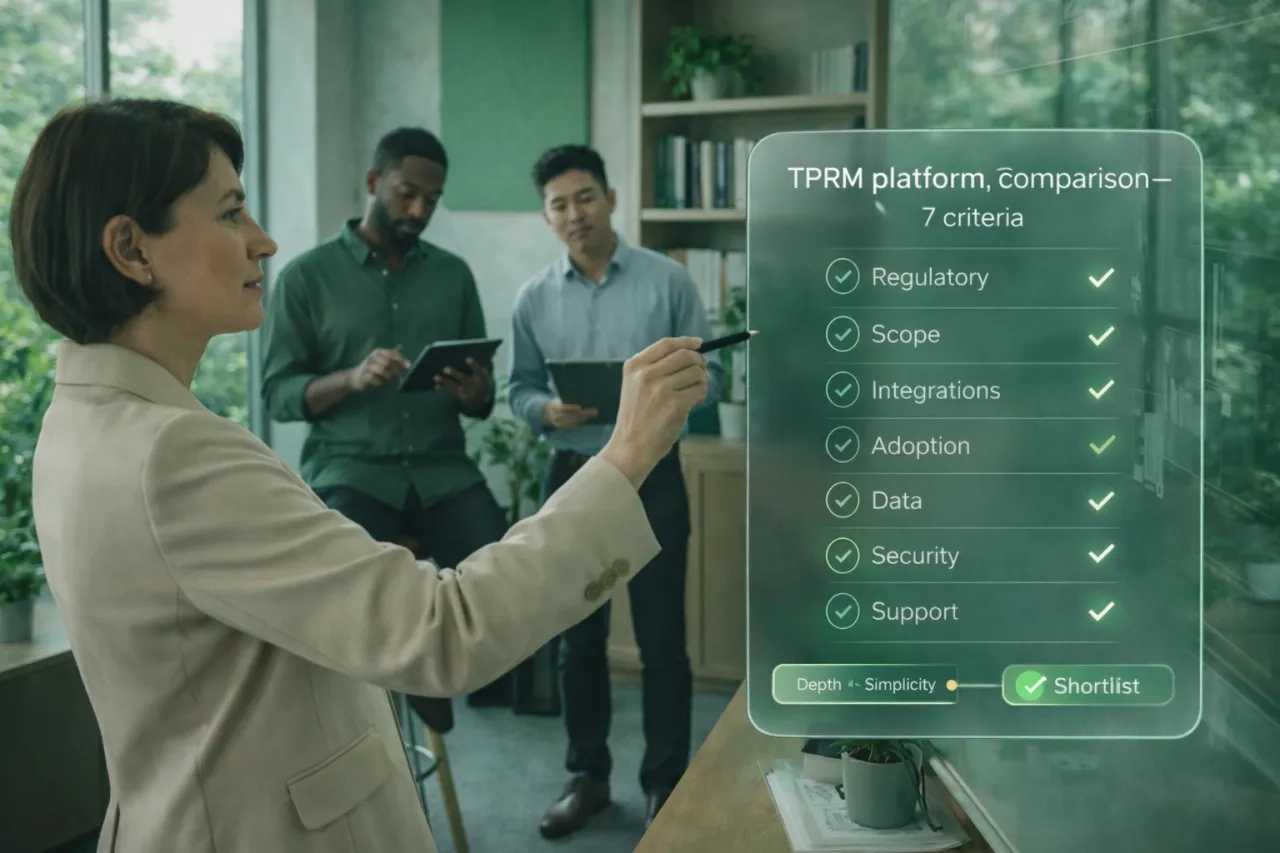 15 January 2026Compare TPRM Platforms in Europe: 7 Key Selection CriteriaTPRM&TPGRCComparing Third-Party Risk Management (TPRM) platforms has become a strategic task for many European organizations. The rise in regulatory requirements, increasing reliance on critical suppliers, and pressure for greater traceability make these decisions more complex than they seem. Rather than limiting the assessment to a functional comparison, an effective evaluation relies on structural criteria related […]
Read more