ESG supply chain assessment and management: a 5-step method
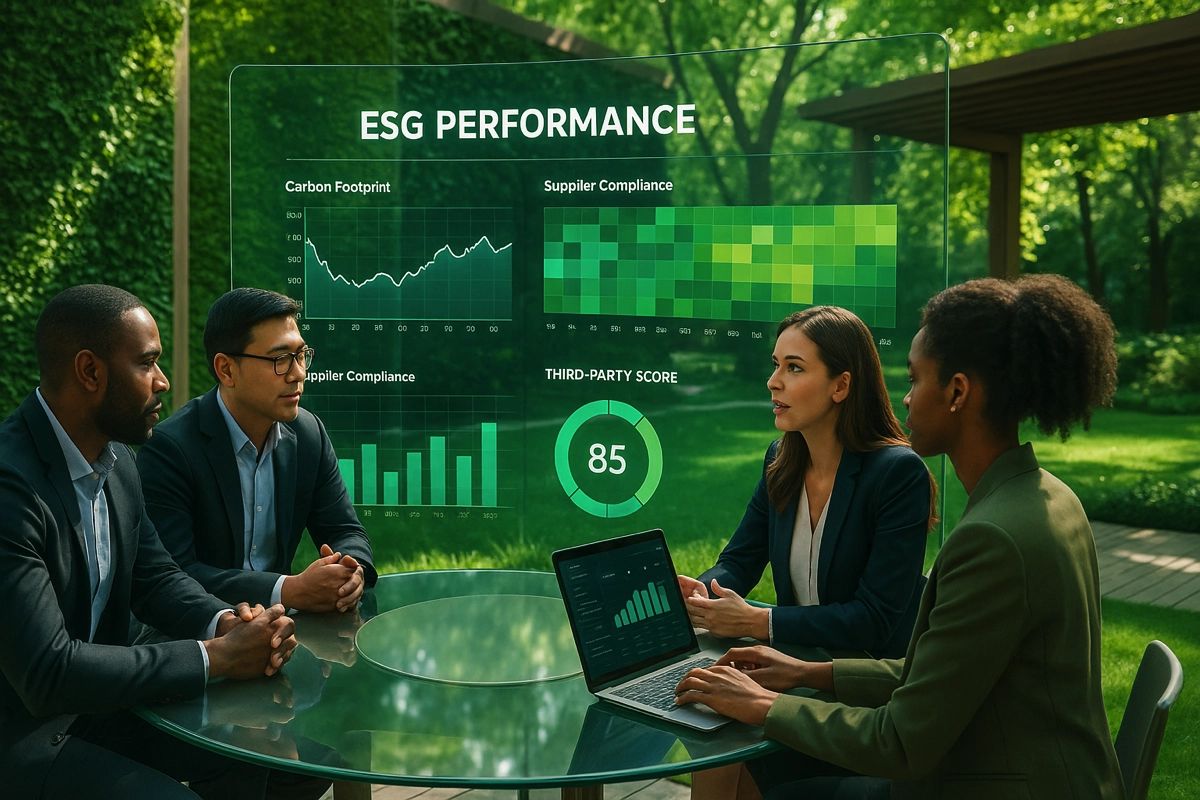
An ESG supply chain assessment is the structured process of mapping where environmental, social and governance (ESG) risk sits across your supply chain, deciding which suppliers and subcontractors to assess first, then managing the risks you find. It is how an ESG strategy becomes operational across the supply chain; the wider context and regulatory drivers are covered in our pillar article on ESG and the supply chain. According to the 2025 Supply Chain ESG Risk Outlook by LRQA, over half of sourcing countries are now classified as high or extreme ESG risk, challenging the common perception that Western markets are inherently safer. This new reality demands a deep transformation in how companies assess third-party partners throughout their supply chains.
In light of evolving regulations such as the CSRD and the EU Deforestation Regulation, organizations must rethink their third-party governance approach to ensure a responsible supply chain. With more than 518,000 third parties assessed, Aprovall’s expertise supports this critical transition toward collaborative and proactive ESG risk evaluation.
Key takeaways
- An ESG supply chain assessment shows where environmental, social and governance risk sits among your suppliers, then drives action on the ones that matter most.
- Five steps: map risk, prioritize suppliers, assess with evidence, act on the results, monitor continuously.
- Regulation sets the frame: CSRD and CSDDD (narrowed by Omnibus I) and the EU Deforestation Regulation from December 2026.
- Most of a company’s carbon footprint sits with its suppliers, so Scope 3 reporting depends on supplier data.
Why run an ESG supply chain assessment?
ESG diagnostics for external providers are now essential for any organization aiming to sustain its operations. Your suppliers’ environmental, social and governance failures become your own exposure: regulatory, reputational and operational. An assessment shows where that exposure sits before it turns into a disruption.
In the construction sector, material traceability and subcontractor management are key challenges. Collaborative evaluation of ESG practices helps anticipate non-compliance risks that could jeopardize entire construction projects and expose contracting authorities to legal liabilities.
To go deeper into decarbonization and subcontractor management, check out our dedicated report.
Key figures
Failing to tackle climate-related risks in the supply chain costs nearly three times more than the actions needed to mitigate them.
How to run an ESG supply chain assessment in five steps
A successful ESG program is built upon structured evaluations of strategic suppliers. ISO 20400, the international guidance standard on sustainable procurement, recommends a risk-based approach: identify sustainability risks across the supply chain, then focus effort where they are most significant. In practice, that gives five steps:
- Map ESG risk across the supply chain: by country, sector, purchase category and spend, to see where environmental, social and governance risk concentrates.
- Prioritize critical suppliers: combine ESG risk exposure with business criticality, so the deepest assessment goes to the suppliers that matter most.
- Assess with evidence: send a questionnaire proportionate to the supplier’s risk level, backed by documents, certifications or audits rather than declarations alone.
- Act on the results: agree corrective action plans with suppliers below your thresholds and support their progress, rather than only excluding them.
- Monitor continuously: re-assess on a cadence set by criticality and react to alerts between campaigns (see the monitoring section below).
In industrial sectors, this method supports compliance with the EU Industrial Emissions Directive and REACH (Registration, Evaluation, Authorization, and Restriction of Chemicals). Repeated, shared assessments pay off: in the EcoVadis Sustainability Ratings Index, nearly 46% of companies rated in both 2021 and 2025 had reached the Advanced or Outstanding level by 2025.
To prevent “supplier fatigue,” it’s crucial to adopt a mutualized, automated evaluation model. This approach centralizes information and optimizes resources for both the company and its third-party partners. To explore how to implement an ESG evaluation program tailored to your partners, see our guide on integrating ESG criteria into supplier evaluation.
→ To launch a first supplier ESG program without complexity, see our guide on taking your first steps in supplier ESG evaluation.
Engaging stakeholders for full adoption
ESG stakeholder governance: roles and responsibilities
The engagement and maturity of stakeholders is a determining factor in the success of an ESG strategy for the supply chain. In practice, procurement usually runs the assessment campaigns, the CSR / ESG team sets the criteria, compliance and legal own the regulatory follow-up, and suppliers contribute their own data. Our article on building an ESG procurement strategy with your suppliers details how procurement organizes it. Engagement delivers: suppliers in CDP’s supply chain program reported that buyer engagement led to 43 million tonnes of emissions reductions.
To maximize engagement, three levers prove especially effective:
- Transparency around objectives and assessment methodologies
- Reciprocity in sharing data and best practices
- Recognition of ESG performance as a competitive differentiator
This participatory model transforms ESG audits into a true driver of shared performance.
Scope 3 decarbonization starts with supplier data
According to CDP and BCG, companies’ supply chain (Scope 3) emissions are on average 26 times higher than their operational emissions. Scope 3 measurement is now high on the agenda, often handled by Procurement teams. This measure is closely tied to supplier assessments and their maturity in reducing carbon footprints. It’s vital to integrate supplier evaluation processes capable of capturing this information. Our guide to the Scope 3 data collection methodology under the CSRD explains how to collect that data from suppliers.
Which regulations shape an ESG supply chain assessment?
Several EU texts directly impact third-party governance. The Corporate Sustainability Reporting Directive (CSRD) requires in-scope companies to report on their value chain, and the Corporate Sustainability Due Diligence Directive (CSDDD) requires due diligence on adverse impacts across their chain of activities. The Omnibus I Directive (Directive (EU) 2026/470) narrowed both: the CSRD now applies to companies with more than 1,000 employees and over €450 million net turnover, the CSDDD to companies with more than 5,000 employees and over €1.5 billion net worldwide turnover, from 26 July 2029. Non-EU groups are covered too, based on their EU turnover. Value chain data is the sticking point: in PwC’s Global CSRD Survey 2024, 59% of companies cited data availability and quality and 57% value chain complexity as major obstacles.
Good to know
Omnibus I also limits what in-scope companies may ask smaller suppliers for CSRD reporting: value-chain companies with up to 1,000 employees may decline CSRD-related requests that go beyond the EU voluntary reporting standard. Size your ESG questionnaires accordingly and keep deeper due diligence for high-risk suppliers.
To manage CSRD compliance and structure your third-party governance, see our article on ESG data governance under the CSRD.
These regulations reflect the urgency of environmental challenges facing businesses. The EU regulation on deforestation will require operators to prove that the cattle, cocoa, coffee, palm oil, rubber, soy and wood products they place on the EU market are deforestation-free and traceable to the plot of land, from 30 December 2026 for large and medium-sized companies and 30 June 2027 for most micro and small ones (Regulation (EU) 2025/2650), while the EU green taxonomy redefines sustainable investment criteria.
In the retail sector, these regulatory shifts demand in-depth assessments of ESG practices across marketplaces and international suppliers. Yet visibility stops early: in McKinsey’s 2025 supply chain risk survey, 95% of companies see tier-one supplier risks, but only 42% see beyond tier one.
To anticipate these requirements, organizations must deploy assessment tools tailored to industry needs and capable of real-time ESG data analysis.
Which KPIs and cadence for ESG supply chain monitoring?
Continuous improvement of ESG evaluation processes relies on the adoption of innovative technologies. Our article on optimizing ESG evaluation tools shows how to upgrade the questionnaires, ERP modules and portals already in place. According to EcoVadis, 68% of buyers have already deployed AI in their sustainability programs.
To ensure a resilient value chain, three best practices stand out:
- Continuous monitoring of ESG performance indicators
- Collaborative evaluation using shared frameworks
- Data pooling to reduce administrative burdens
Track a short set of supply chain ESG KPIs, for example:
- Share of spend and of critical suppliers covered by an up-to-date ESG assessment
- Questionnaire completion rate and supplier response time
- Share of suppliers below threshold with an agreed action plan, and plans closed on time
- Share of suppliers reporting primary carbon data for your Scope 3
- Number of ESG alerts (incidents, sanctions, expired certificates) and time to resolve them
Set the monitoring cadence by criticality: critical and high-risk suppliers are reviewed at least once a year and followed by alerts in between; lower-risk suppliers on a lighter cycle or at contract renewal.
These methods, supported by secure, sovereign digital infrastructure, form the foundation of a long-term ESG strategy for the supply chain. A robust measurement framework is now essential to capture and highlight progress.
Where to start
Assessment, monitoring and action plans work best when CSR, procurement and compliance teams share the same supplier data. See how Aprovall supports CSR and ESG teams in managing their suppliers’ ESG commitments, from ESG questionnaires to carbon maturity, Scope 3 data and ESG dashboards.
From risk management to collaborative supplier governance
Measuring ESG performance among third-party partners is now a strategic indicator for responsible organizations. Yet according to CDP, only 1 in 4 disclosing companies factor supply chain climate-related risks into their risk management.
In the public sector, this transformation is a key lever for achieving sustainable development goals. Its weight is considerable: according to the European Commission, over 250,000 public authorities in the EU spend around €2.6 trillion a year, or 15% of EU GDP.
Moving from basic risk management to collaborative governance of external providers requires three core components:
- Relevant performance indicators tailored to each sector
- A secure evaluation platform supporting ESG and other risk domains (financial failure, legal, ethical) (see our article on centralized ESG platforms)
- Customized support for partner progress
This comprehensive approach not only supports regulatory compliance but also anticipates future developments.
Thus, building a responsible supply chain is no longer just aspirational: it’s a concrete reality for forward-thinking organizations. The ESG approach deployed today within your supply chain will shape your ability to thrive in a world where environmental, social, and governance excellence is a must. This collective goal is the new standard for building strong, future-ready relationships with third-party partners.
Where does ESG risk sit in your supply chain?
See how Aprovall helps you meet CSRD and CSDDD requirements across your third parties.
-
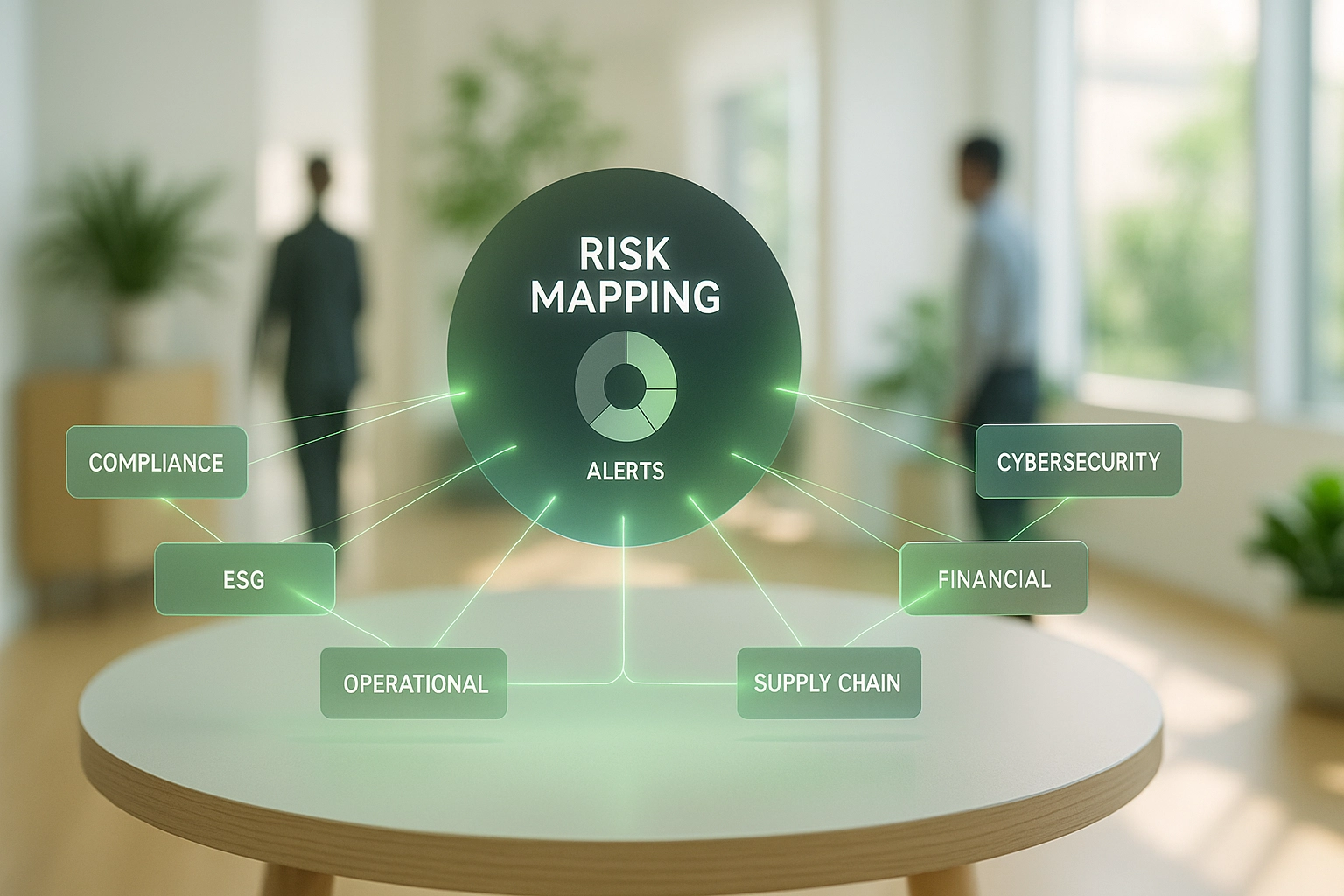 18 July 2025Why Connecting Your Risk Mapping to TPRM Is a Game ChangerSolutionsIn a context where third-party ecosystems are expanding, organizations can no longer afford to manage their vendor relationships blindly. Companies are now selecting partners based on increasingly specific criteria, and many have implemented risk mapping tools to gain a clearer view of the risks posed by their subcontractors. They must actively manage third-party risks. According […]
Read more
-
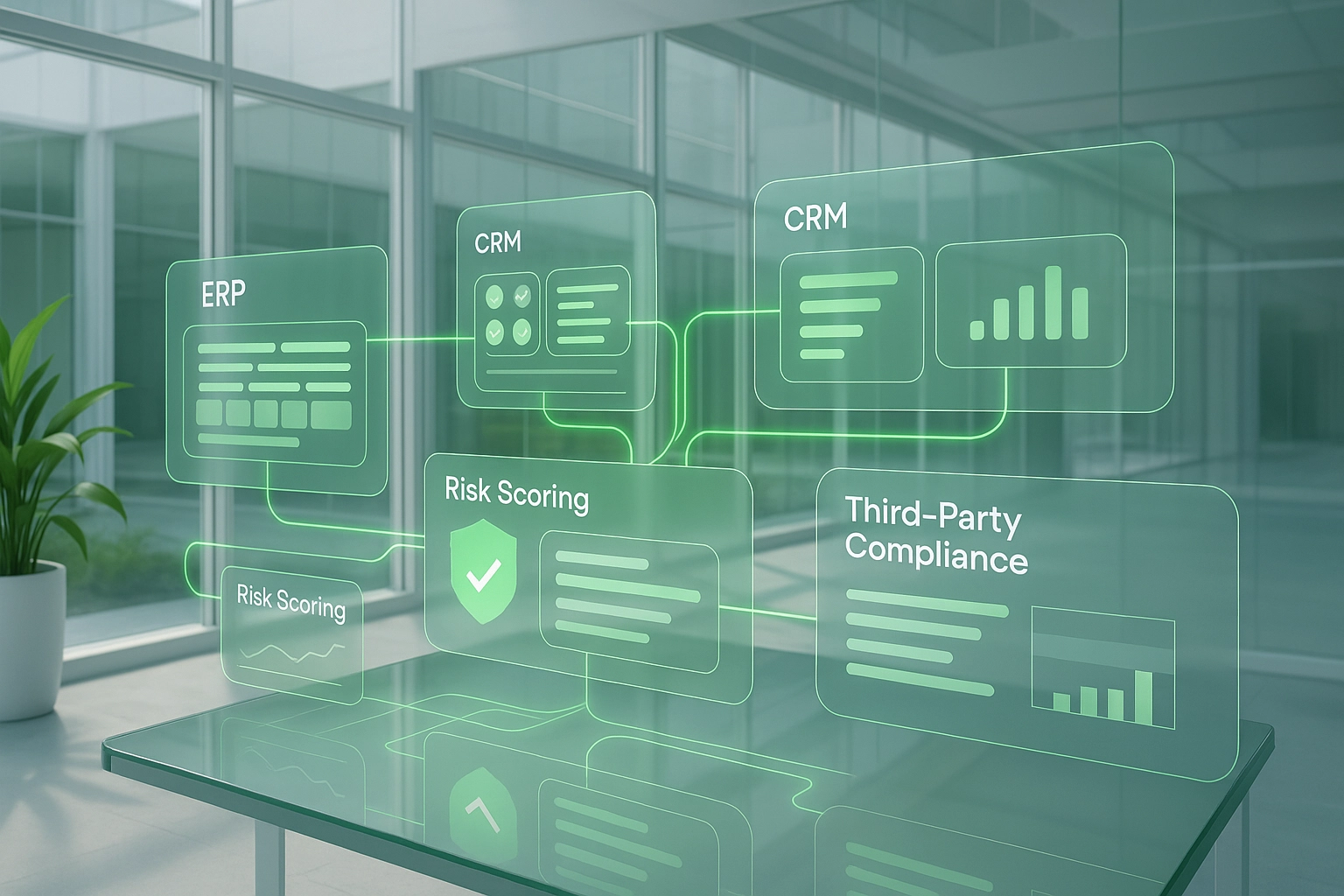 30 January 2025Integrating Information Systems into TPRM PlatformsSolutionsIntegrating information systems into TPRM platforms has become a major strategic issue for organizations. A recent study reveals that 41% of companies experienced a serious third-party breach in the past 12 months, underlining the urgency to adopt robust third-party governance solutions. In this context, Third-Party Risk Management (TPRM)platforms are evolving to offer a more collaborative and […]
Read more
-
 03 February 2025TPRM vs Traditional Risk Management: A Critical Comparison for Modern BusinessesSolutionsIn a market valued at $8.3 billion in 2024 and projected to reach $18.7 billion by 2030, third-party governance is becoming a strategic pillar for organizations. In response to the rapidly evolving business world, Third Party Risk Management (TPRM) is profoundly transforming traditional risk management practices. The traditional approach, focused on internal processes, is no longer sufficient […]
Read more
-
 11 March 2025Comprehensive Methodology for Third-Party Risk MappingSolutionsIn today’s business environment, where relationships with external partners are strategic, third-party governance has become an essential priority. Third-party risk mapping is a critical tool for identifying, structuring, and prioritizingfactors that may impact the organization. According to a recent Gartner study, over 60% of organizations have now implemented a centralized or federated model for managing third-party risks, […]
Read more