Optimize Your Supply Chain Monitoring with Dynamic and Customizable TPGRC Dashboards
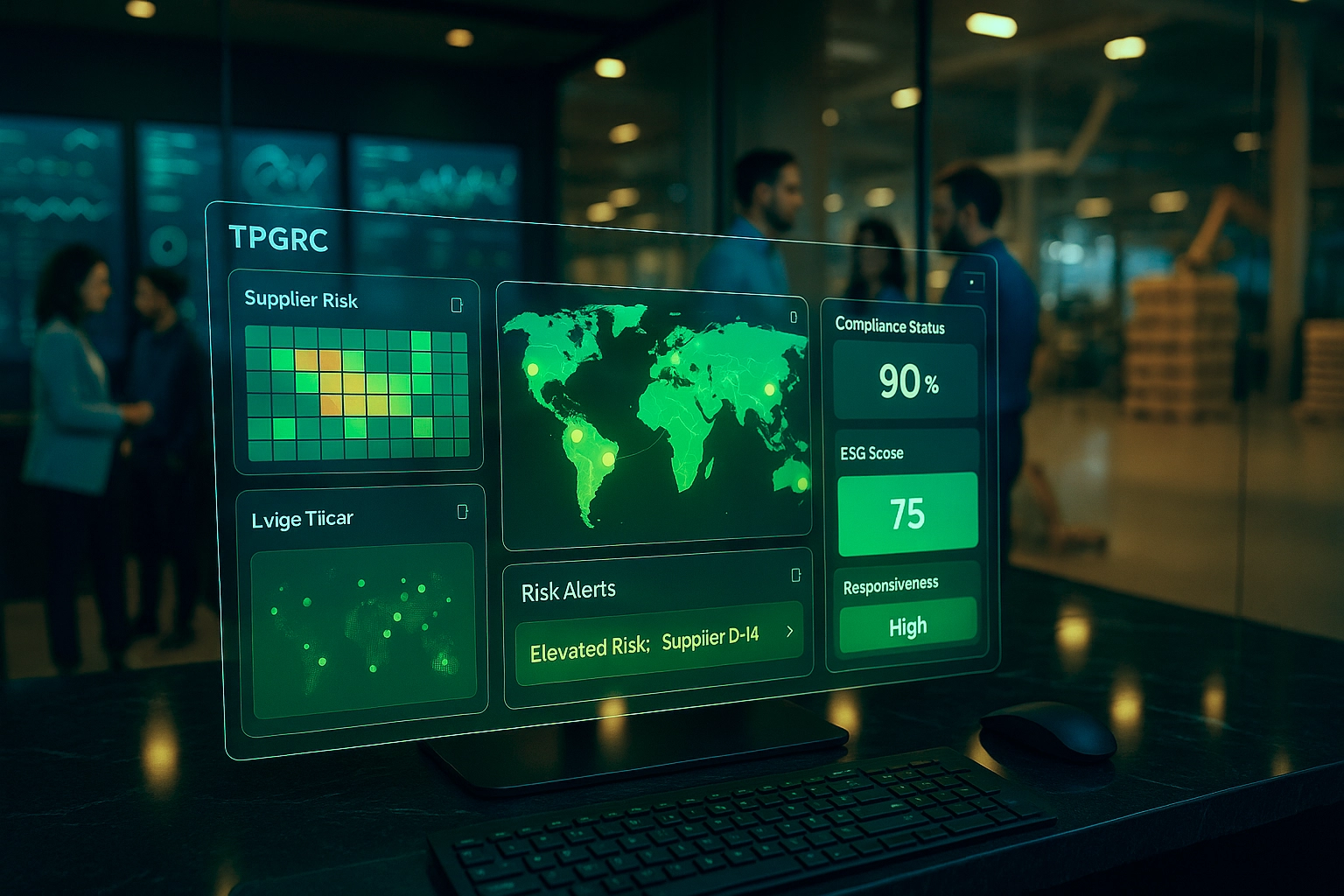
Effectively Manage Supplier Risks with Real-Time Indicators
The international context, new regulations, and expanding sourcing are pushing Procurement and Purchasing Departments to simplify supplier relationship monitoring. These evolutions require real-time management of the many supplier-related data points and compliance requirements. In an environment marked by tighter regulations and greater demand for transparency, the statuses, scores, and indicators generated from every supplier interaction have become essential for guiding strategic decisions.
The Importance of Dashboards in Supplier Risk Management
Companies operating in demanding sectors such as construction, industry, or luxury goods—as well as public sector organizations—are facing growing challenges in supplier management. Regulations are tightening (duty of vigilance, CSRD, Sapin II Law), expectations regarding social and environmental responsibility are intensifying, and the need to optimize costs while ensuring a resilient supply chain has become a strategic imperative.
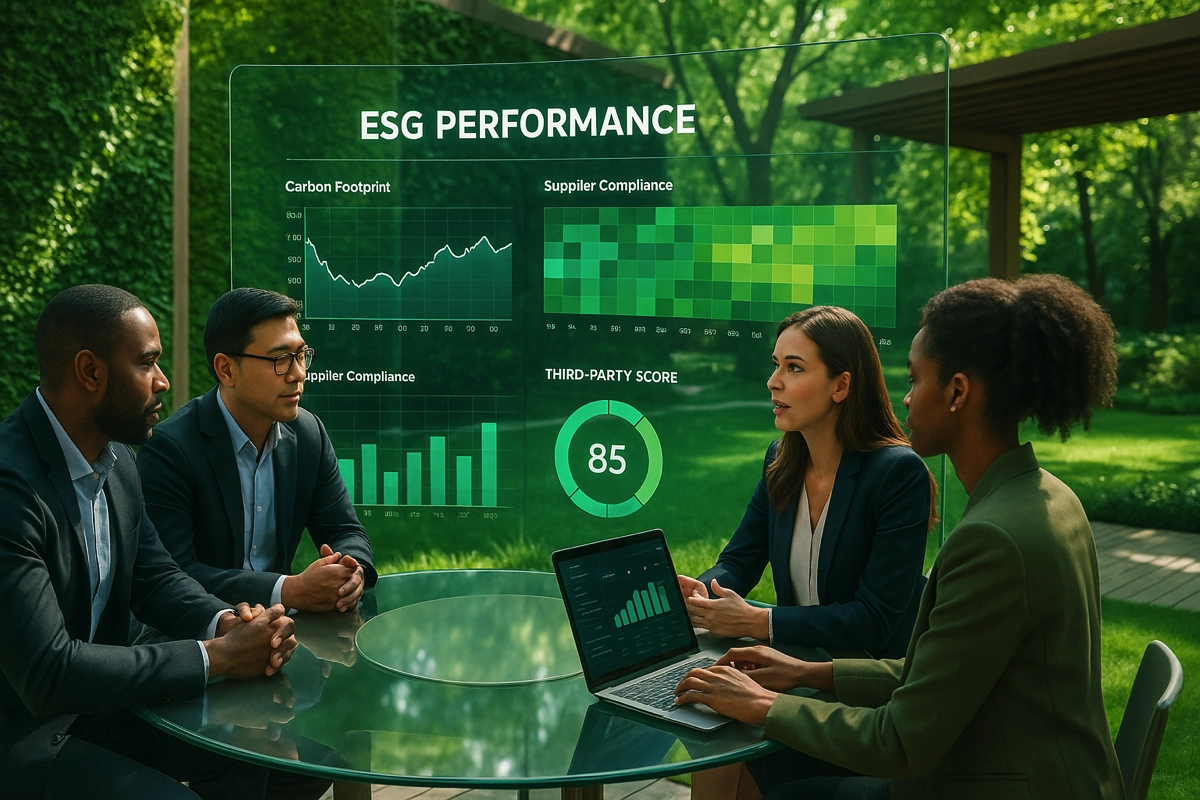
Dashboards dedicated to TPRM (Third Party Risk Management) and TPGRC (Third Party Governance & Risk Compliance) projects play a key role in this equation. They provide a consolidated view of third-party risks, enable early detection of anomalies, and facilitate decision-making by offering instant visibility into critical indicators.
Tangible Benefits Across All Sectors
Using a high-performing TPGRC dashboard results in measurable gains at several levels:
- In Construction (BTP): Securing worksites by ensuring subcontractor compliance and meeting legal obligations (URSSAF declarations, insurance).
- In Industry: Anticipating supply chain risks to avoid disruptions and ensuring optimal traceability of components.
- In Luxury: Guaranteeing supplier compliance with ethical sourcing and environmental standards.
- In the Public Sector: Rigorous monitoring of suppliers and contractors to ensure compliance with public procurement regulations (transparency requirements, fight against undeclared work, respect for social and environmental clauses). With an integrated dashboard, administrations can track contractual commitments in real time, ensure compliance with legal obligations, and optimize third-party risk management.
Note
A Deloitte study, relayed by Pom at Work, indicates that nearly 79% of companies that implemented a purchasing dashboard reported a significant improvement in overall performance.
These tools enable:
Key Features of an Effective TPGRC Dashboard
To be truly effective, a dashboard dedicated to third-party risk management must provide:
- Clear KPI visualization: ESG risks, regulatory compliance, supplier financial health, contract statuses.
- Advanced customization: Every company has unique needs; a strong tool adapts to specific business and regulatory requirements.
- Real-time alerts: Automatic notifications for non-compliant suppliers or critical risks.
- Interoperability with existing tools: ERP, CRM, SRM, compliance systems.
- Advanced analytics capabilities: AI integration for risk prediction and supplier strategy optimization.
- Easy sharing: Data accessible not only to operational teams but also to decision-makers.
Aprovall360: An Innovative Solution for Optimal Supplier Ecosystem Management
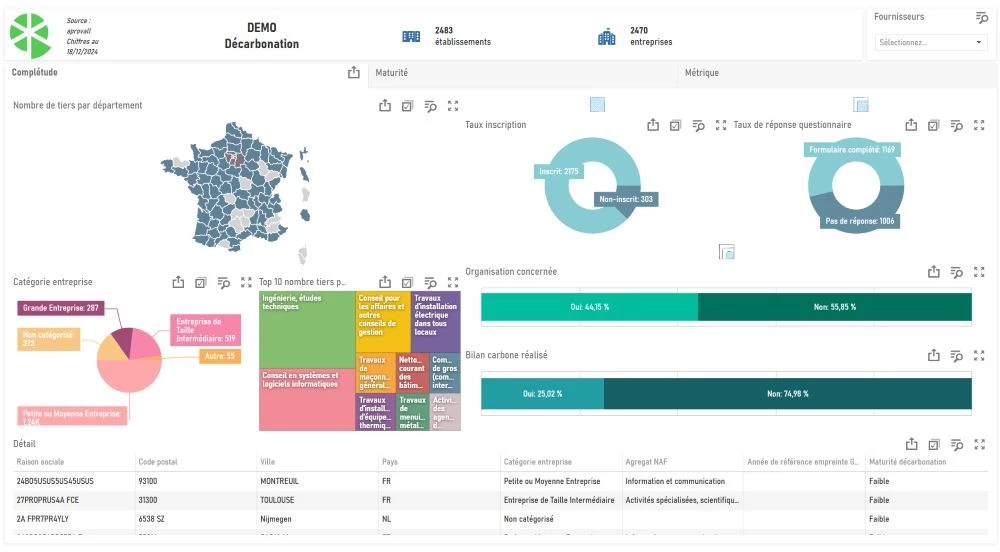
Aprovall360 offers dashboards designed with cutting-edge business intelligence technologies. Thanks to a fully customizable approach, the Aprovall Dashboard solution enables you to:
- Centralize and aggregate all data from your TPRM platform.
- Integrate your data sources (ERP, SRM, CRM) in real time or manually to refine analyses.
- Dynamic display: Clear, precise visualization of key indicators (legal risks, ESG, regulatory compliance, supplier financial strength).
- Third-party performance tracking: Identify strategic suppliers, assess reliability, and detect compliance gaps.
- Sharing and collaboration: Data accessible to all stakeholders, from procurement teams to legal and financial departments.
With an intelligent repository, Aprovall360 eliminates duplicates and inconsistencies in databases, ensuring a single, reliable view of each supplier.
In a Context of Rising Regulations and Growing Third-Party Risks
Adopting a high-performance TPGRC dashboard is an essential lever for companies seeking to strengthen resilience and optimize supplier management.
Move to Proactive Management Today!
With Aprovall360, benefit from an intuitive, powerful solution tailored to the needs of the most regulated industries. Stop reacting to risks—anticipate, measure, and manage them with confidence.
-
 18 April 2025ESG Strategy for the Supply Chain: Assessment and Management MethodsSolutionsThe ESG strategy (Environment, Social, Governance) has become a fundamental pillar of corporate operational resilience. According to the 2025 Supply Chain ESG Risk Outlook by LRQA, over half of sourcing countries are now classified as high or extreme ESG risk, challenging the common perception that Western markets are inherently safer. This new reality demands a […]
Read more
-
 03 February 2025TPRM vs Traditional Risk Management: A Critical Comparison for Modern BusinessesSolutionsIn a market valued at $8.3 billion in 2024 and projected to reach $18.7 billion by 2030, third-party governance is becoming a strategic pillar for organizations. In response to the rapidly evolving business world, Third Party Risk Management (TPRM) is profoundly transforming traditional risk management practices. The traditional approach, focused on internal processes, is no longer sufficient […]
Read more
-
 14 March 2025Integrating ESG Criteria into Supplier EvaluationSolutionsIntegrating environmental, social, and governance (ESG) criteria into the evaluation of third-party partners has become essential for companies seeking to strengthen their operational resilience and promote sustainable development. These criteria make it possible to analyze not only economic performance but also the environmental and social impact of business relationships. According to a recent McKinsey study, […]
Read more
-
 30 September 2025TPRM Visions 2026: Expanding the Evaluation Spectrum to Anticipate Emerging RisksSolutions2026: A Turning Point in Third-Party Evaluation Third-party management is undergoing a major transformation. Until now, companies have focused their evaluations on the most immediate risks: supplier financial stability, ethical compliance, and fraud prevention related to banking information. These areas remain critical. But by 2026, TPRM (Third Party Risk Management and Compliance) will broaden its scope to […]
Read more