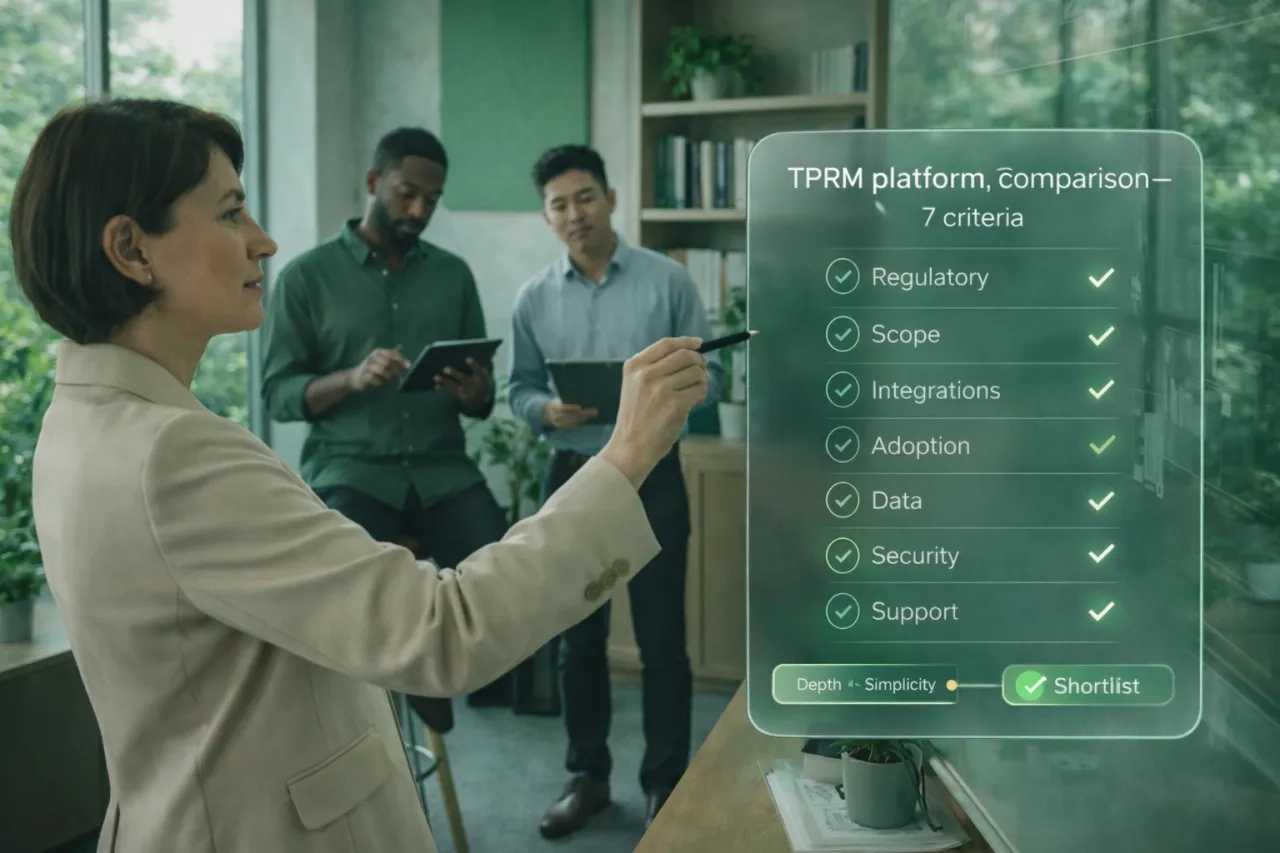
TPRM integrations : best ERP & GRC integrations for third-party risk

TPRM integrations : breaking down ERP & GRC data silos
TPRM-integrations : when third-party risk, procurement, and compliance data sit in disconnected ERP and GRC systems, organisations lose real-time visibility and create audit exposure. The goal is a unified, measurable control layer where vendor risk signals flow into procurement decisions and governance becomes traceable.
Organisations managing complex supplier ecosystems face a structural weakness: third-party risk data, procurement data and compliance data are stored in disconnected systems. Procurement operates in SAP or Oracle, compliance tracks controls in spreadsheets or GRC tools, and risk teams maintain separate vendor repositories. This fragmentation creates operational blind spots and regulatory exposure that modern oversight frameworks no longer tolerate.
The convergence of TPRM (Third-Party Risk Management), ERP and GRC systems is no longer a technical optimisation. It is a strategic requirement. When these platforms integrate effectively, organisations gain a unified, real-time view of vendor risk, procurement activity and compliance status. Manual reconciliations disappear. Risk signals flow directly into operational decision-making. Governance becomes measurable and auditable.
Enterprises that align TPRM with core business systems report significant performance gains: accelerated vendor onboarding, reduced compliance rework and improved detection of emerging supplier risks. More importantly, integration reduces systemic risk by eliminating the silos that allow critical issues to go unnoticed.
Breaking Down Data Silos in Third-Party Risk Management
Data silos in vendor management create tangible business risk. When procurement awards contracts without visibility into incomplete risk assessments, organisations onboard suppliers who have not met due diligence requirements. When compliance obligations are tracked separately from procurement activity, enforcement becomes inconsistent and reactive.
An effective TPRM platform must operate as a central risk intelligence hub. It should:
The architecture behind this integration is critical. Modern API-driven frameworks enable real-time data exchange and scalability. Legacy batch uploads or custom middleware often introduce latency, maintenance burdens and upgrade instability.
In highly regulated industries such as financial services, integration is no longer optional. Supervisory authorities expect organisations to demonstrate clear linkage between outsourcing decisions, risk assessments and ongoing oversight. Similar expectations are now emerging across sectors under DORA, NIS2 and supply chain resilience legislation.
Enhancing Compliance Through Automated GRC Workflows
Manual compliance processes do not scale. When assessment findings must be manually transferred from TPRM tools into GRC platforms, errors multiply and audit trails fracture.
Integrated TPRM–GRC environments enable automated workflows triggered by defined risk thresholds. For example:
These automated control mechanisms ensure consistent treatment of risk events, independent of individual oversight. They also provide defensible audit evidence aligned with ISO 27001, SOX, GDPR and sector-specific regulatory requirements.
Automation does not remove human judgment. It reinforces governance by ensuring that no critical risk event goes unnoticed due to process gaps.
Key Features of Strongly Integrated TPRM Solutions
Selecting a TPRM platform without evaluating its integration capabilities is a common strategic error. Standalone functionality matters less than interoperability within the enterprise technology stack.
Native API Connectivity with Major ERP Ecosystems
Robust platforms offer native connectors to SAP S/4HANA, Oracle Cloud, Microsoft Dynamics and other major ERP environments. Native integration reduces implementation complexity and long-term maintenance risk.
Key evaluation criteria include:
Closed-loop integration is essential. Risk insights must flow back into procurement systems so that purchasing decisions reflect current vendor risk status.
Real-Time Risk Scoring and Continuous Monitoring
Static, point-in-time assessments are insufficient. Continuous monitoring capabilities should integrate external intelligence feeds, including:
When these signals update vendor risk profiles, connected GRC and ERP systems should reflect the changes automatically. This ensures that compliance teams and procurement managers operate with current risk intelligence rather than outdated assessments.
Dynamic vendor segmentation further enhances resilience. Instead of relying solely on annual spend thresholds, organisations can adjust oversight intensity based on evolving risk exposure.
Leading TPRM Platforms with Strong Integration Capabilities
Several enterprise-grade platforms distinguish themselves through integration maturity and ecosystem alignment.
Each platform presents distinct strengths depending on the organisation’s ERP landscape, regulatory profile and risk complexity.
Technical Considerations for Sustainable Integration
Successful convergence requires disciplined technical planning.
Data Integrity and Vendor Master Governance
ERP vendor master data must be cleansed before integration. Duplicate records, inconsistent naming conventions and incomplete identifiers undermine risk mapping accuracy. Integration projects often fail because underlying data quality issues are ignored.
Clear governance over vendor identifiers and risk categorisation ensures consistency across systems.
Bidirectional Update Logic
Integration should not be one-directional. Changes in procurement status (such as vendor deactivation or payment holds) must synchronise with TPRM platforms. Likewise, risk findings should immediately influence procurement workflows.
Without this synchronisation, systems gradually diverge, reintroducing silo risk.
Mapping to Global Regulatory Frameworks
Organisations operating internationally must align assessments with multiple regulatory frameworks. Integrated platforms should allow mapping between vendor risk assessments and:
Centralised reporting capabilities simplify audit preparation while maintaining jurisdiction-specific compliance coverage.
Future-Proofing Integrated Risk Architectures
Convergence strategies must account for technological evolution.
AI-Driven Predictive Risk Intelligence
Advanced TPRM platforms increasingly incorporate machine learning models capable of identifying vendors at heightened risk of:
When integrated into ERP procurement workflows, predictive risk insights support proactive sourcing decisions and contingency planning.
Natural language processing enhances document review efficiency, extracting relevant clauses from contracts and aligning them with risk frameworks.
Selecting platforms with open API architectures and active AI development roadmaps ensures long-term adaptability.
Convergence as a Strategic Imperative
The convergence of TPRM, ERP and GRC systems transforms third-party risk management from a reactive compliance function into a strategic control framework. Integrated architectures provide:
In an environment where regulators demand demonstrable oversight and supply chain disruptions can propagate rapidly, fragmented systems represent structural risk.
Organisations seeking a European solution aligned with evolving EU regulations may consider platforms purpose-built for this context. Aprovall provides centralised document management, multidimensional risk scoring across financial, legal, ESG and cybersecurity domains, and automated compliance audit trails designed for European governance frameworks.
The future of third-party risk management lies not in isolated tools, but in integrated ecosystems that unify procurement, risk and compliance into a single operational intelligence layer.
Book a meeting at our booth
Don’t miss this opportunity to connect with our team, see our solutions in action, and discuss how Aprovall can help you drive procurement excellence and stronger supplier risk management.
-
 09 January 2026Why All-in-One TPRM Platforms Are Becoming Essential in EuropeTPRM&TPGRCEuropean companies increasingly rely on a complex network of partners and suppliers. Each new third party enriches this ecosystem but also increases risk. These risks include cyber threats, operational challenges such as financial or ethical risks, and regulatory requirements. Traditional, often fragmented, TPRM solutions are no longer sufficient. That’s why all-in-one TPRM platforms are gaining […]
Read more
-
 03 January 2026Who Needs an All-in-One TPRM Platform in Europe: SMEs to EnterprisesTPRM&TPGRCThird-party risk management (TPRM) has become a structural issue for European businesses of all sizes. IT outsourcing, industrial subcontracting, critical suppliers, service partners—every third-party relationship extends the value chain… and the risk surface. But given the variety of tools and approaches available, one question often arises: At what point does an all-in-one TPRM solution actually […]
Read more
-
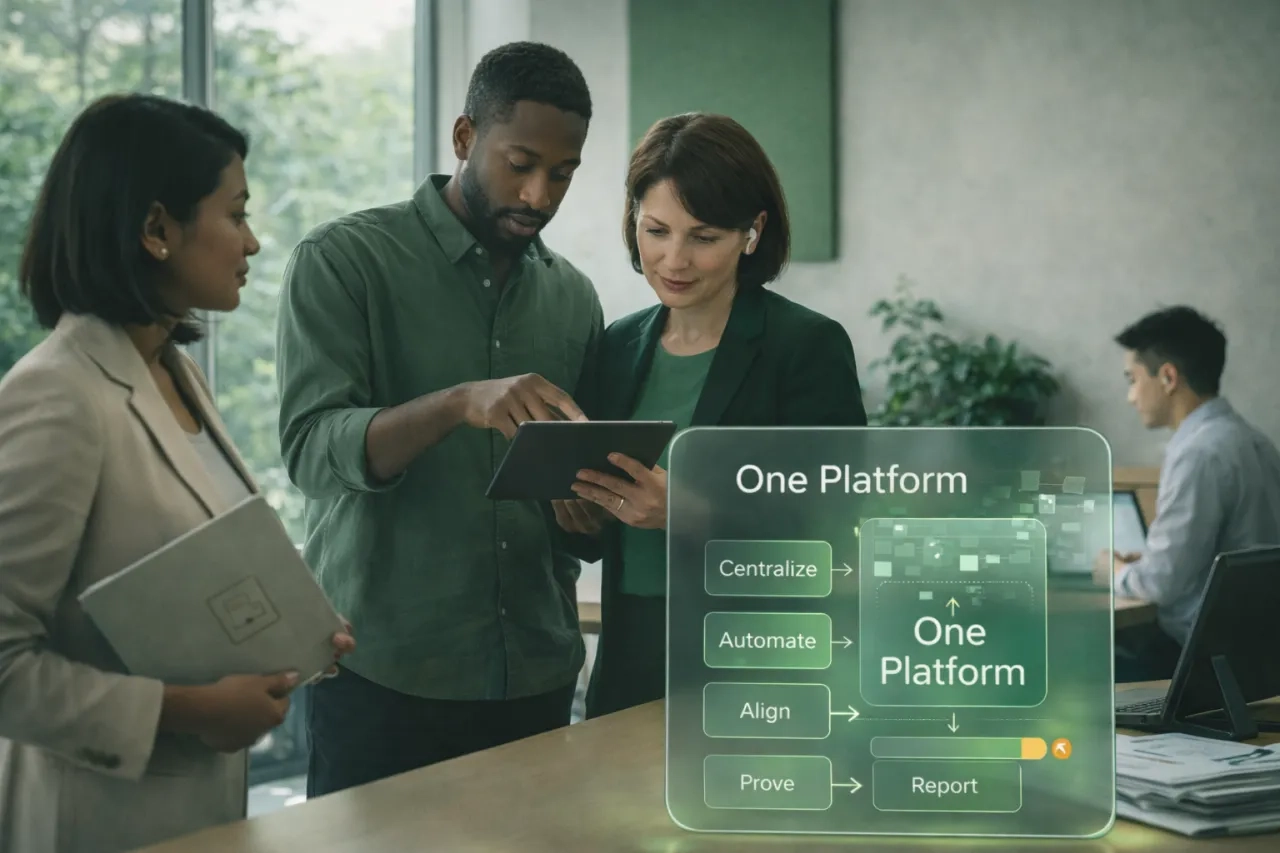 14 January 2026Unified TPRM Platform for Procurement & Compliance TeamsTPRM&TPGRCProcurement and Compliance teams face a common challenge: managing third-party risks efficiently while meeting increasingly stringent regulatory requirements. The growing number of suppliers, the complexity of compliance obligations, and the pressure to accelerate processes make this task especially demanding. In this context, a unified TPRM (Third-Party Risk Management) platform helps structure third-party risk management and […]
Read more
-
 15 January 2026Compare TPRM Platforms in Europe: 7 Key Selection CriteriaTPRM&TPGRCComparing Third-Party Risk Management (TPRM) platforms has become a strategic task for many European organizations. The rise in regulatory requirements, increasing reliance on critical suppliers, and pressure for greater traceability make these decisions more complex than they seem. Rather than limiting the assessment to a functional comparison, an effective evaluation relies on structural criteria related […]
Read more