Understanding Scope 3 Assessment in the Value Chain

Anticipating Your Carbon Footprint by Assessing Suppliers and Identifying Scope 3 Maturity
In a context where third-party environmental governance is becoming a major strategic issue, companies must now evaluate and manage the carbon impact of their entire value chain. Scope 3 assessment represents a considerable but essential challenge to ensure organizations’ operational resilience in the face of increasing regulatory demands. Understanding the principles and mechanisms of this assessment is the first crucial step before implementing an effective strategy.
According to the Thomson Reuters report, Scope 3 indirect emissions are on average 11 times higher than direct company emissions and account for over 70% of their total carbon footprint. This reality fundamentally shifts the approach to environmental compliance, moving from an internal logic to a truly collaborative evaluation involving all third-party partners.
This article first explores the fundamentals of Scope 3 evaluation for better understanding, then details how to implement an effective Scope 3 assessment methodology based on experience managing over 450,000 third parties and the principles of TPGRC (Third Party Governance & Risk Compliance) to address specific sectoral challenges.
What is Scope 3?
Scope 3 includes all indirect emissions generated by external stakeholders throughout an organization’s value chain. Unlike Scopes 1 and 2, which cover direct emissions and those related to purchased energy, Scope 3 encompasses all other indirect emissions. Understanding this dynamic is critical before considering the operational implementation of effective third-party governance.
According to the GHG Protocol, these emissions can be divided into 15 distinct categories, covering both upstream activities (sourcing, transport) and downstream activities (product use, end-of-life). Joint analysis of these emissions is essential, as they represent on average 70% of a company’s total carbon footprint according to the CDP.
In the construction sector, for example, Scope 3 emissions primarily come from purchased materials (cement, steel, glass) and can account for up to 90% of the total carbon footprint. This dominance of external emissions calls for a complete overhaul of evaluation practices, leading companies toward an inclusive approach that places third-party partners at the heart of environmental strategy.
Implementing effective external partner management helps identify critical points and initiate a collaborative process with partners to reduce the overall environmental impact.
Methodology for Assessing Scope 3
Assessing Scope 3 emissions requires a structured and collaborative approach with value chain stakeholders. According to the GHG Protocol, this structured methodology requires “broader engagement within the reporting company, as well as with suppliers and external partners” to be truly effective.
Effective third-party governance begins with identifying the relevant Scope 3 categories for your organization, followed by prioritizing partners based on their potential impact. This detailed mapping then enables constructive dialogue with suppliers, explaining the importance of the initiative and its mutual benefits. This collaborative evaluation methodology is broken down into clear steps: identification, prioritization, engagement, and continuous monitoring.
In the industrial sector, companies can significantly reduce supplier fatigue by adopting a shared assessment process rather than a traditional audit approach. According to the CSRD, this method improves data quality while strengthening relationships with third-party partners.
Emission Sources and Data Collection
Data collection is a critical step in the Scope 3 assessment methodology. A secure, pay-to-collect data pooling model optimizes this process while ensuring the quality of the information gathered.
Collection methods can be based on spend (using financial data), activity (relying on specific measurable data), or a hybrid approach depending on data availability. In the construction sector, for example, analysis of building materials accounts for up to 90% of the total carbon footprint according to ADEME.
Integrated Governance Platforms
Integrated governance platforms are now replacing traditional standardized tools, offering a more comprehensive and effective approach. These solutions automate data collection, harmonize formats across partners, and integrate with existing management systems. These technologies enhance the assessment methodology by automating the most complex processes.
AI-powered document analysis enables efficient processing of documents provided by strategic suppliers, automatic extraction of relevant information, and validation of sector-specific certifications. In retail, this technology helps assess marketplaces and product compliance while providing real-time monitoring of partners.
Third-Party Governance Challenges
Integrating Scope 3 evaluation into third-party governance strategy is a major challenge for organizations. According to Réseau Action Climat, Scope 3 emissions can be three to four times higher than the combined emissions of Scopes 1 and 2, highlighting the importance of collaborative evaluation with external partners.
In the public sector, local authorities face increasing demands for transparency in their supply chains. Implementing third-party environmental governance not only ensures regulatory compliance but also strengthens operational resilience against climate risks.
New regulations such as the CSRD now mandate comprehensive assessment of indirect emissions throughout the value chain, turning what was once a voluntary initiative into a legal requirement. This regulatory shift favors organizations that have adopted a proactive approach to third-party risk management.
Collaborative Optimization of the Environmental Footprint
Reducing Scope 3 emissions requires a systemic approach based on the continuous evaluation of third parties. This collaborative model is a key driver of value chain decarbonization, especially for upstream activities.
In the distribution sector, companies can favor local suppliers for raw materials, reducing emissions linked to international transport and complex logistics. This sustainable sourcing strategy is part of a broader third-party governance approach and significantly improves the overall carbon footprint.
Leveraging centralized management solutions supports this approach by enabling real-time monitoring of environmental performance and identifying opportunities for collaborative improvement—all while ensuring data sovereignty in accordance with European standards.
Measuring Environmental and Economic Benefits
Scope 3 assessment generates tangible benefits, both environmentally and economically. According to the Science Based Targets Initiative, “robust third-party governance not only identifies risks but also reveals opportunities for innovation and collaboration” that enhance an organization’s operational resilience.
In the distribution sector, jointly reviewing logistics partners can reduce operating costs by 5 to 15% while cutting the carbon footprint. This approach turns carbon reduction efforts into a competitive advantage, especially for companies subject to CSRD requirements.
Establishing a permanent monitoring system for third parties’ environmental performance also helps anticipate regulatory risks and respond effectively to growing investor demands for non-financial transparency.
Impact on the Value Chain
Collaborative third-party evaluation has a ripple effect across the entire value chain through its governance strategy.
In the public sector, local authorities that include environmental criteria in their supply chain partner assessments create a multiplying effect that progressively transforms supplier practices. This approach strengthens procedural transparency and enhances the effectiveness of public policies to reduce GHG emissions, particularly for entities subject to SPASER requirements.
Consolidated supervision tools support this transformation by enabling secure sharing of environmental data among partners, reducing “supplier fatigue” while improving the quality and reliability of the information collected—ensuring regulatory reporting compliance.
Why is Scope 3 Evaluation Essential for the Future?
Scope 3 evaluation is far more than just an environmental initiative: it is a cornerstone of third-party risk management. According to the Science Based Targets Initiative, “companies that overlook their indirect emissions miss significant opportunities for risk reduction and collaborative innovation”.
The shift from TPRM to TPGRC (Third Party Governance & Risk Compliance) places the collaborative assessment approach at the heart of sustainability strategies. This framework helps uncover hidden risks while strengthening organizational resilience against growing regulatory challenges such as the CSRD.
In the industrial sector, pioneering companies are already transforming their supply chains through integrated governance platforms that facilitate the low-carbon transition via ongoing evaluation of third-party partners. This proactive approach goes beyond compliance—it creates an ecosystem of partners aligned around shared goals for environmental and economic performance.
A deep understanding of Scope 3 evaluation mechanisms is a prerequisite for action. The future belongs to organizations that, having mastered these concepts, will turn Scope 3 evaluation into a strategic lever for transformation and collaborative innovation.
Ready to transform your Scope 3 assessment approach?
See how companies like TAG Heuer and Sercel have optimized their third-party environmental governance with an integrated platform.
-
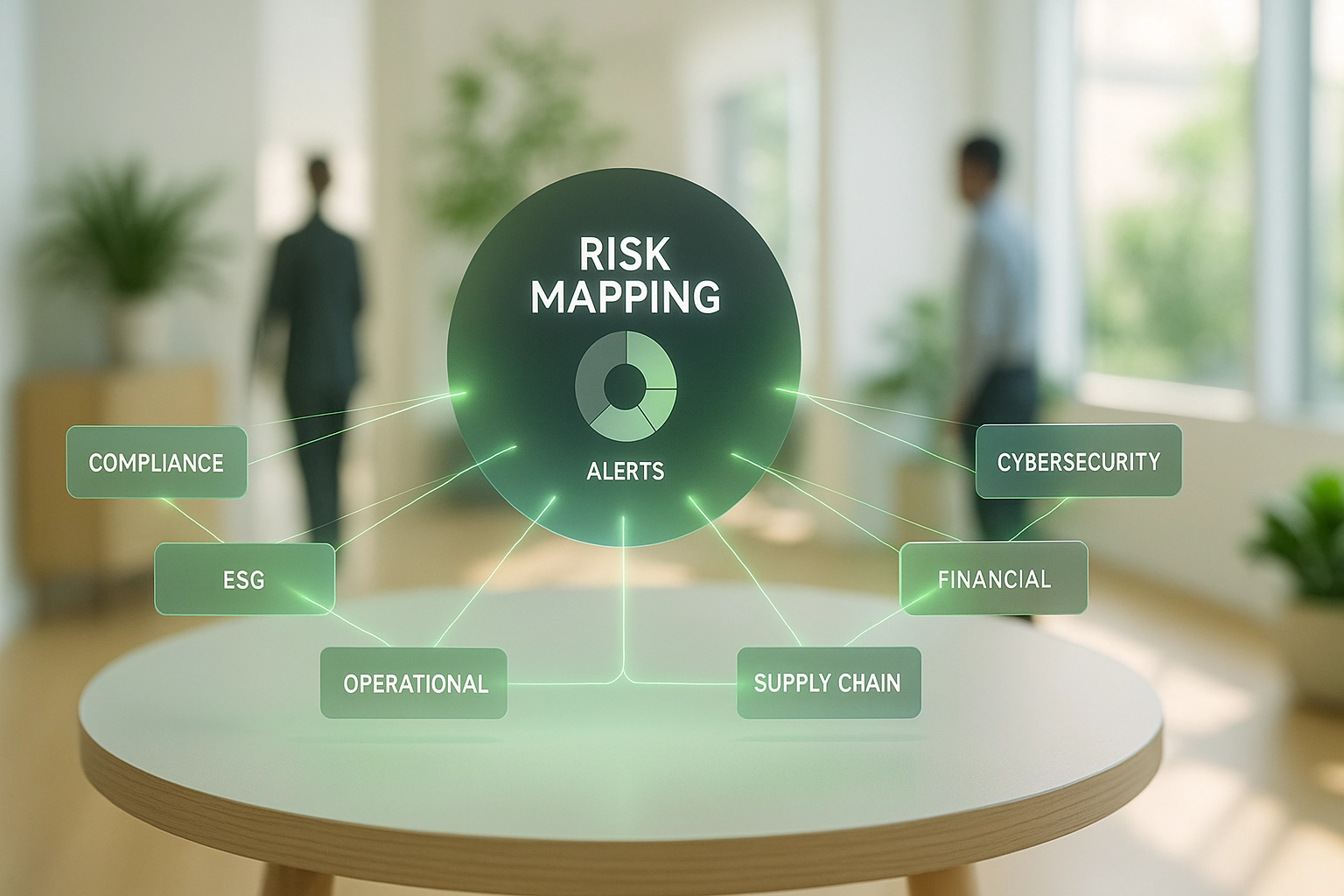 18 July 2025Why Connecting Your Risk Mapping to TPRM Is a Game ChangerSolutionsIn a context where third-party ecosystems are expanding, organizations can no longer afford to manage their vendor relationships blindly. Companies are now selecting partners based on increasingly specific criteria, and many have implemented risk mapping tools to gain a clearer view of the risks posed by their subcontractors. They must actively manage third-party risks. According […]
Read more
-
 03 March 2025Understanding Dynamic Risk Scoring: Fundamentals and Implementation for Third-Party GovernanceSolutionsDynamic risk scoring has become an essential tool for organizations seeking to optimize their third-party governancestrategies. With increasingly complex partnerships and growing regulatory requirements in Europe—particularly DORA and NIS 2—it is crucial to understand how this methodology transforms collaborative assessment of third-party partners. According to data reported by Sprinto, 58% of compliance teams identify assessing third-party responsiveness as their main challenge […]
Read more
-
 17 December 2025How TPRM Maximizes the Management of Class C SuppliersSolutionsThe Class C Supplier Paradox In most organizations, the management of Class C suppliers is built on a well-known paradox: they represent only about 20% of total procurement spend, but consume nearly 80% of the procurement team’s time. These suppliers, often non-strategic and outside of core production, generate a high volume of invoices, administrative tasks, […]
Read more
-
 15 January 2026TPRM platforms in Europe: 7 selection criteriaTPRM&TPGRCQuick answer: TPRM platforms in Europe are typically compared on more than feature coverage. A robust selection process checks regulatory alignment (GDPR, NIS2, DORA, CSRD), proportional controls by third-party criticality, and adoption by both internal teams and suppliers. In large deployments, platforms designed as a single system of record for third-party governance have been associated […]
Read more