How to optimize the ESG assessment tools you already use
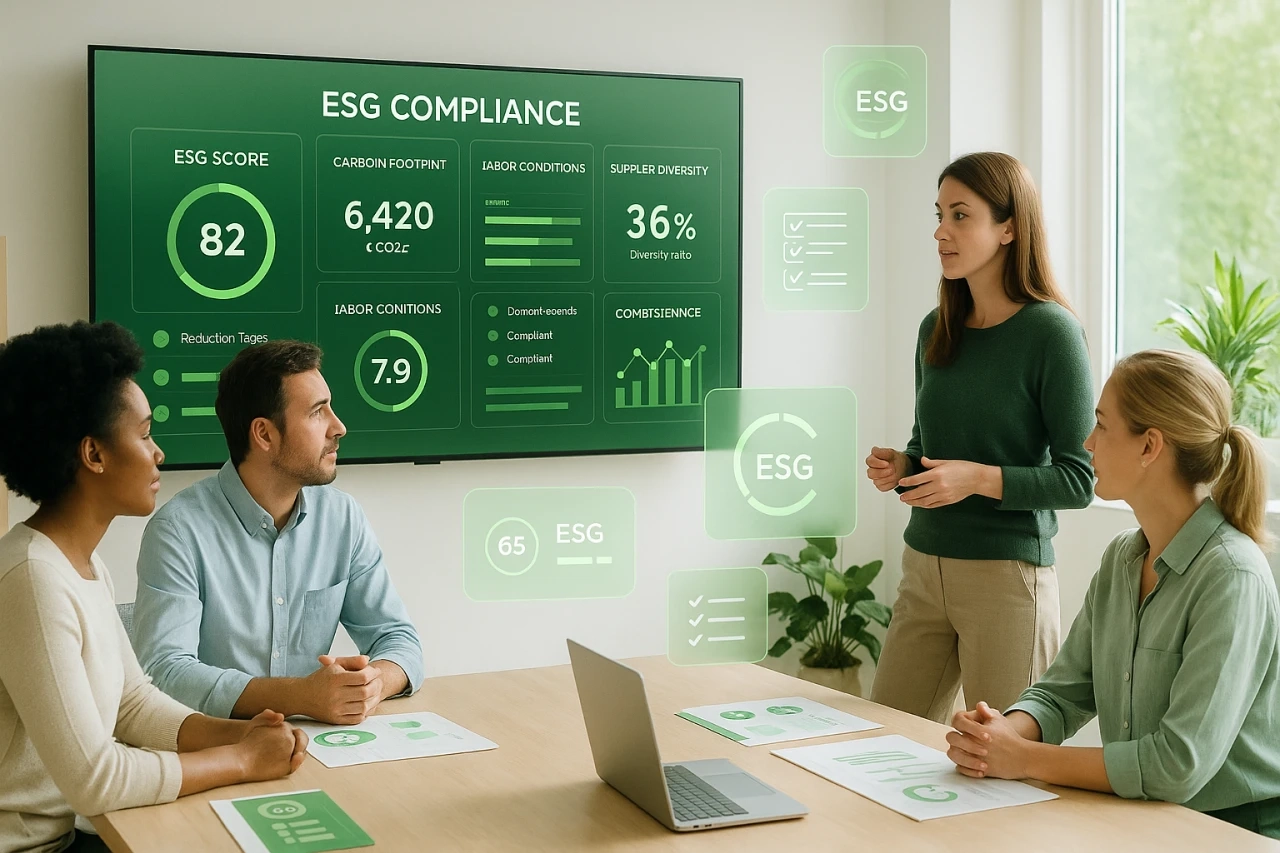
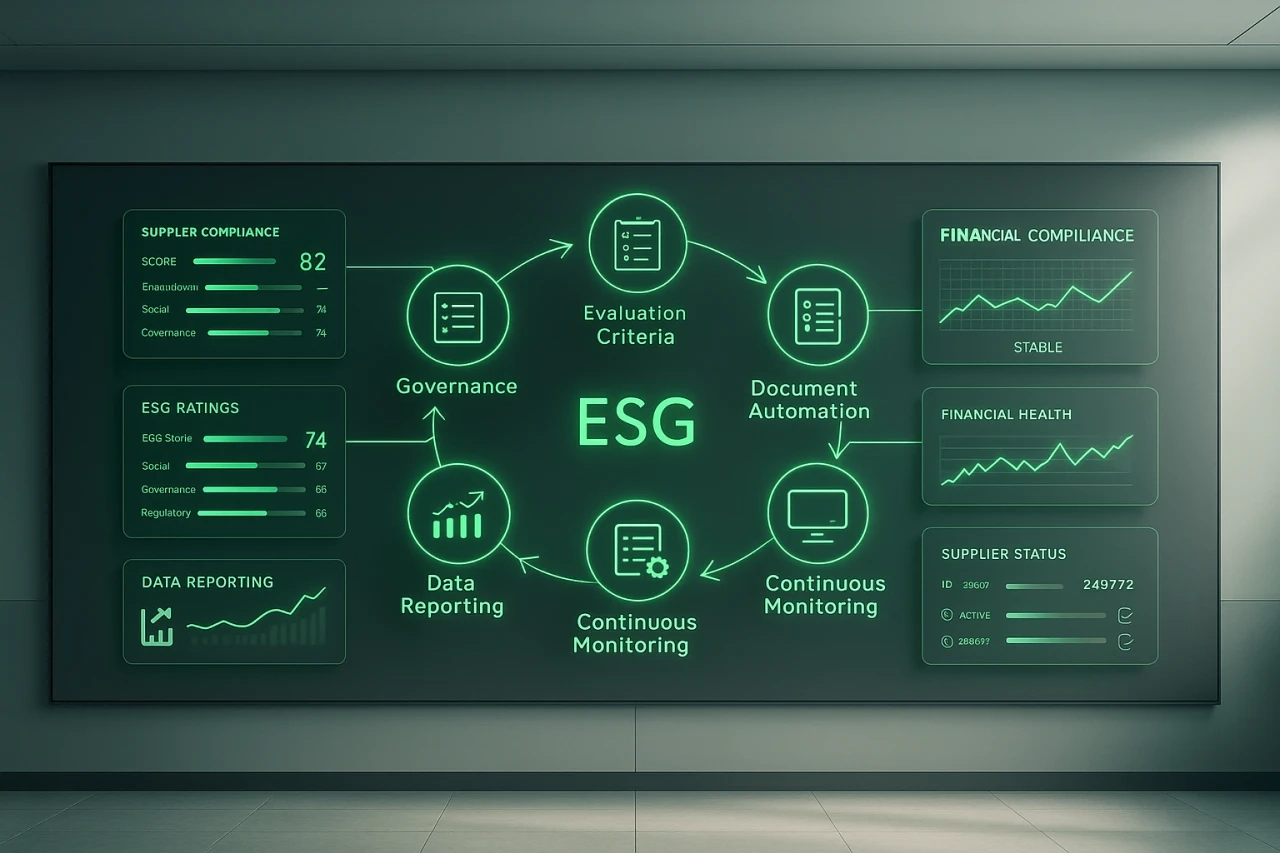
Faced with increasing regulatory pressure and the rise of sustainable transformation, organizations must rethink their third-party governance. Your ESG assessment tools are where that governance happens: they collect, score and track your suppliers’ ESG data, and they meet the ESG challenges now reshaping the supply chain head on. The Omnibus I directive (2026) narrowed CSRD and CS3D to the largest companies, yet many organizations still treat supplier ESG commitment as a key risk factor to assess.
This article is designed for organizations that have already deployed ESG assessment tools and are seeking to optimize existing performance. Rather than starting from scratch, we help improve current workflows to increase efficiency, reduce administrative burden, and maximize the value of collaborative evaluations. Just getting started? Our guide on taking your first steps in supplier ESG evaluation covers the basics.
Key takeaways
- Audit your current tools before adding new ones: coverage, data quality, supplier burden.
- Ask less, ask once: segment questionnaires by supplier risk and reuse the data you already hold.
- Automate collection and reminders so ESG data volumes don’t depend on manual work.
- Move from annual campaigns to continuous monitoring, triggered by events rather than the calendar.
Where do supplier ESG assessment tools stand today?
In many organizations, supplier assessments still rely on traditional frameworks: ISO quality certifications, REACH declarations, regulatory attestations, or simple questionnaires. Collaborative approaches are limited, and meaningful responsible initiatives are rarely treated as strategic assets.
The arrival of the CSRD changes this balance: ESG reporting requires reliable, comparable data across stakeholders. According to the 2024 Observatoire des Achats Responsables, only 32% of French companies have ESG evaluation tools integrated into their procurement processes. Managing ESG risks from the selection stage and throughout the supplier lifecycle is essential to operational resilience, especially in complex, international supply chains.
This shift is accelerating in the manufacturing sector, where large contractors now impose standardized ESG criteria. To meet this challenge, optimize your ESG supply chain strategy and build a sector-specific, structured methodology.
Examples of optimization based of your current tools
Excel questionnaires
Migrate to automated collaborative platforms
Basic ERP/SRM modules
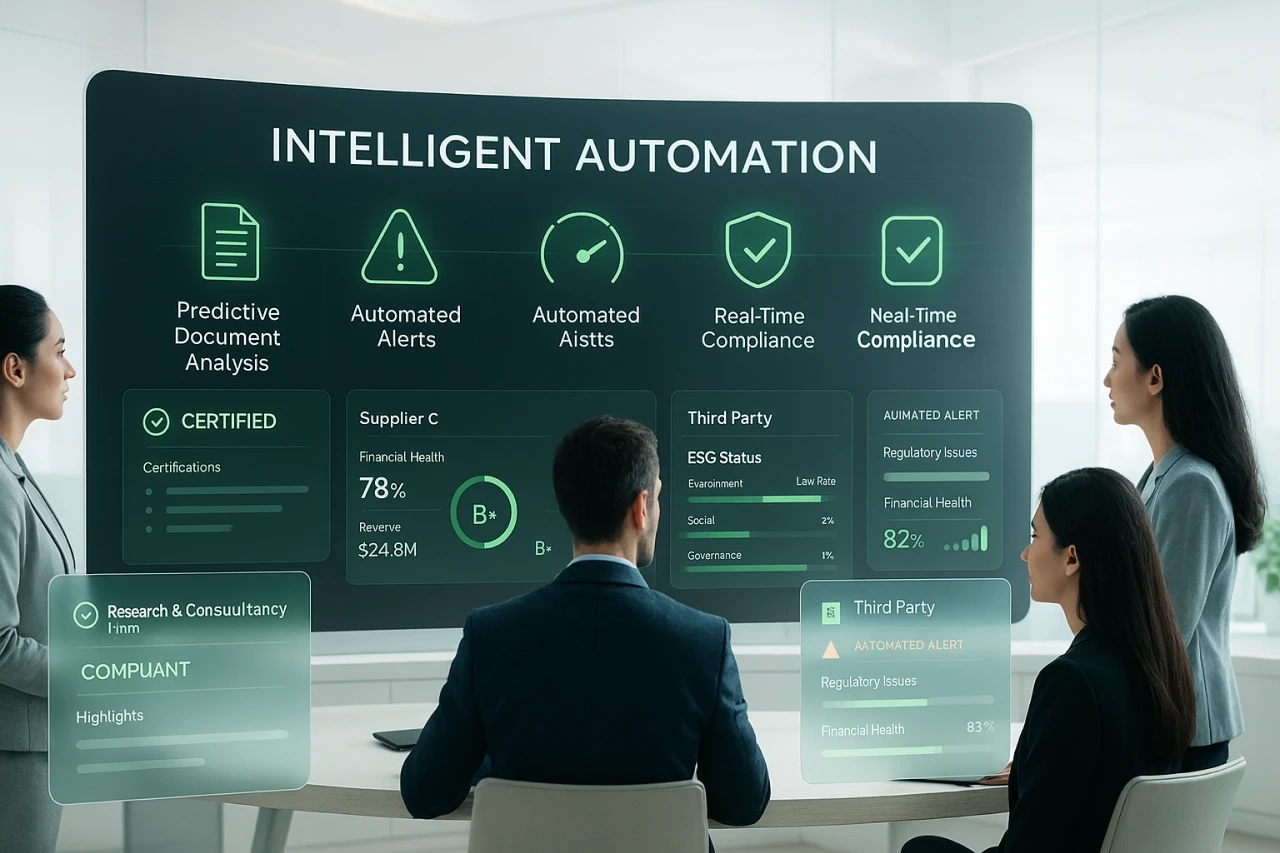
Enrich with predictive ESG scoring and real-time alerts
Static supplier portals
Add smart workflows and dynamic dashboards

One-off manual audits
Switch to continuous monitoring using AI and anomaly detection
What better ESG tools change
Proactively managing ESG criteria brings measurable benefits to operational resilience. It reduces reputational risk by ensuring partners align with the expectations of consumers and investors. Systematic use of sustainability indicators broadens your ESG performance perspective beyond minimum compliance.
Stronger third-party governance on ESG creates operational gains. Well-run tools enable better regulatory anticipation and smoother responsible purchasing workflows.
Sector feedback confirms that a collaborative approach boosts CSR oversight and delivers a long-term competitive advantage.
Main roadblocks to ESG optimization
Despite growing consensus on ESG’s importance, several barriers slow the transformation of evaluation processes. Sector-specific diversity makes it hard to create harmonized, fit-for-purpose criteria. Many procurement tools still don’t allow for detailed collection or dynamic tracking of ESG indicators.
Overloading partners with redundant or excessive demands leads to supplier fatigue. Long questionnaires and non-collaborative processes reduce data reliability and discourage engaged suppliers, especially in public construction or heavy industries. Regulation now caps these requests too: under Omnibus I, value-chain companies with up to 1,000 employees may decline CSRD-related requests that go beyond the EU voluntary reporting standards.
Lack of automation is another major barrier. Manual approaches struggle to handle increasing ESG data volumes, reducing organizations’ ability to spot emerging risks and measure sustainable impact. To address this, implement a collaborative methodology that minimizes overhead while maximizing added value, as described below.
How to optimize your ESG assessment tools in three steps
Step 1: audit your existing processes
Optimizing your existing ESG tools starts with auditing your current tools. Are your questionnaires creating supplier fatigue? Are ESG indicators used in decision-making? A detailed review highlights covered ESG areas, assesses information quality, and benchmarks your maturity level against CSRD standards.
Involving key internal stakeholders (procurement, supply chain, compliance) encourages ownership and helps prioritize action. In industrial contexts, this stage also verifies whether environmental permit compliance is addressed in supplier risk analysis. A collaborative approach avoids siloed decision-making and builds a shared vision of ESG priorities. To frame those priorities at strategy level, see how to build an effective ESG procurement strategy.
Step 2: cut and segment your questionnaires
Rationalizing current ESG criteria often starts with simplification. Analyze existing criteria to remove redundancy, drop low-impact indicators, and strengthen decision-critical ones. Criteria should match the business context: CO2 for industry, social traceability for retail, water use in construction. Then segment: send the full questionnaire to critical suppliers only, a lighter version to the rest, and reuse answers and documents suppliers have already provided.
It’s better to focus on a concise set of actionable ESG indicators than chase exhaustiveness. Altares-D&B reports up to 25% less third-party management time when TPRM processes are automated, which also reduces supplier fatigue.
Which criteria to keep, and how to weight and score them, is covered in our guide to ESG criteria for supplier evaluation.
Step 3: operational integration and change management
Next, ESG criteria should be embedded in existing workflows, not added as side processes. Enriching platforms (SRM, ERP, partner portals) with ESG modules improves collection without extra steps. Native integration avoids interface overload and simplifies user experience. When supplier ESG data is spread across too many tools, see why a centralized ESG platform helps.
In retail, adding a few targeted questions on responsible purchasing at key moments (qualification, contract renewal, annual review) improves decision-making without increasing complexity. Automation handles high volumes of ESG data while maintaining evaluation reliability.
Change management is critical: targeted training, user guides, and regular feedback support ESG adoption. When tools enable narrative input, partner engagement tends to rise. Personalized technical support eases the transition and overcomes resistance.
Finally, continuous performance tracking is essential: completeness rates, response time, partner satisfaction, and quarterly supplier fatigue indicators.
Key ESG maturity indicators to track
| Indicator | Indicative target |
|---|---|
| Questionnaire completion rate | > 85% |
| Average supplier response time | < 15 days |
| Share of automated evaluations | > 60% |
| Partner satisfaction score | > 7/10 |
| Supplier fatigue indicators | Down quarter on quarter |
Optimization by tool type
SRM/ERP platforms: functional enrichment
Organizations using ERP-integrated ESG modules (SAP Ariba, Oracle, Ivalua) can optimize via predictive scoring and automated alerts. External APIs can enrich supplier profiles with updated ESG data.
Specialized solutions: upgrading to collaborative models
Users of platforms like EcoVadis or Sustainalytics can increase ROI by improving customized workflows and using sector benchmarking tools to identify top-performing partners.
Internal tools: gradual professionalization
Organizations with in-house tools can integrate recognized standards (GRI, SASB) and automate data collection to reduce manual work and improve reliability.
From annual campaigns to continuous ESG monitoring
Whatever the tool, a yearly questionnaire leaves months in which an expired certificate, a controversy or a missed commitment goes unnoticed. Continuous ESG monitoring replaces the calendar with triggers: a document reaching its expiry date, a change in an external ESG score or rating, a news alert, a contract renewal or a change in the supplier’s risk level.
In practice, set a reassessment rule for each trigger, route alerts to the owner of the supplier relationship, and keep the history so you can show progress at audit time. Automated reminders and real-time alerts keep the workload flat as your panel grows.
Where to start
Aprovall collects your suppliers’ CSR documents, assesses their ESG maturity and carbon strategy, and tracks Scope 3 data in consolidated ESG dashboards, with automated reminders and real-time alerts. See how Aprovall supports CSR and ESG teams with continuous supplier ESG assessment.
Sector insights: how teams get more from their ESG tools
Manufacturing: advanced integration and streamlining
In manufacturing, contractor pressure has driven widespread ESG integration into supply chain systems. Some platforms now automate energy KPI collection and compliance tracking, enabling agile action plans and audit-ready traceability.
The TELT experience with 4,500 partners shows that a user-friendly platform promotes adoption across regions. This collaborative model supports effective third-party governance in complex international environments.
Streamlined ESG indicators increase analytical clarity and reduce documentation burdens for suppliers. Simplicity fosters transparency and constructive dialogue on shared ESG challenges.
Retail and distribution: standardization and tailored support
Retail success relies on one standard core questionnaire shared across suppliers, illustrated with real-world examples. Constant partner support facilitates high-value collaborative evaluations, significantly reducing supplier fatigue.
Top retailers focus on four areas:
- Simplifying workflows via ESG data automation.
- Highlighting innovations in traceability and social engagement.
- Adapting tools to partner maturity.
- Tracking progress with transparent communication.
Explore these sector strategies with TPRM and TPGRC tools transforming retail and distribution to enhance operational resilience.
Keeping your ESG tools performing over time
Optimizing ESG tools requires a cultural shift toward proactive third-party governance. Success depends on visibility and recognition of ESG performance milestones. This cultural change calls for greater transparency and collaboration across internal workflows.
In the long run, only continuous processes combining tech agility, shared frameworks, and strong change support can balance compliance demands, efficiency, and shared value across the supply chain. To structure this transformation, develop a holistic risk management approach that naturally embeds ESG in your collaborative processes.
What are your ESG assessment tools missing?
See how Aprovall supports CSR and ESG teams in managing third parties.
-
 02 June 2025The 6 Pillars of an Effective Supplier Evaluation SolutionSecteurAccording to a 2025 Accenture study, 63% of companies are undergoing transformation. As a result, CIOs, procurement managers, and compliance officers are rethinking their approach to third-party governance. In both public and industrial sectors, it is no longer just about collecting administrative documents, but about structuring supplier relationship management to sustainably strengthen operational resilience. Adopting a collaborative evaluation solution based […]
Read more
-
05 June 2025Automated Evaluation Solutions: How to Streamline Without Sacrificing QualitySecteurAutomating evaluations is becoming an essential step for organizations looking to strengthen their third-party governance. IT decision-makers, especially in construction, industry, and the public sector, are seeking to combine efficiency and time savings with uncompromising quality assurance. Given concerns around the reliability of automation tools and the need for consistent performance, it’s crucial to debunk myths with recent advances in AI and intelligent […]
Read more
-
14 June 2025Supplier Evaluation Journey: Optimizing Multi-Regulatory Data CollectionSecteurThe complexity of third-party evaluation is intensifying as regulatory requirements multiply. This reality calls for a reform of internal processes and the adoption of collaborative workflows that are essential to ensure compliance while strengthening operational resilience. Optimizing the evaluation journey involves a structured methodology that streamlines document collection, improves supplier quality, and significantly reduces “supplier fatigue.” This context calls for a […]
Read more
-
 28 January 2025Third-Party Cybersecurity Benchmark: Assessing and Securing Your Supply Chain in 2025SecteurThird-party cybersecurity has become a major strategic concern for organizations in 2025. According to AgileBuyer, 65% of procurement departments consider supplier failures a critical risk, while 42% list cyberattacks as their second most pressing concern. This challenge is especially acute in certain sectors: 88% of heavy industries anticipate major supplier-related risks, and 68% of IT/Telecom companies […]
Read more