Choosing Your TPRM Platform: A Guide to Efficient Third-Party Risk Management
Third-party risk management (TPRM) has become a major strategic issue for European companies. With the TPRM market valued at USD 6.1 billion in 2023 and projected to reach USD 18.7 billion by 2030, adopting a TPRM platform is essential for navigating today’s complex regulatory landscape. But how do you choose the right TPRM platform tailored […]
Automating CSRD Reporting: A Guide to Streamlined Compliance
The implementation of the EU CSRD directive is revolutionizing how companies approach sustainability reporting. This regulatory shift requires organizations to rigorously assess and document the ESG practices of their external partners, presenting new challenges in data collection and regulatory compliance. How CSRD Is Transforming Third-Party Evaluation The European CSRD directive establishes a stringent regulatory framework […]
Third-Party Cybersecurity Assessment: NIS 2 and DORA Compliance
European companies are facing a major regulatory challenge with the simultaneous implementation of NIS 2 and DORA. These two regulations are radically transforming approaches to cybersecurity and operational resilience, particularly in critical and financial sectors. This convergence requires in-depth multi-regulatory expertise to navigate between specific sectoral obligations and operational synergies. Understanding NIS 2 and DORA […]
Supplier Evaluation in the Public Sector: A Strategic Governance Challenge
The public sector accounts for a significant portion of economic activity in France and involves a large number of contract holders. As such, public sector actors face critical challenges in managing supplier relationships—especially since third-party qualification has become a cornerstone of public procurement strategies. Beyond basic oversight, it now forms part of a broader approach […]
TPRM Deployment in the Public Sector: Insights and Expertise
In an environment where interactions with third-party partners play a crucial role in the functioning of public organizations, proactive risk management for these relationships has become a strategic priority. Third-Party Risk Management (TPRM) is now an essential approach to ensure regulatory compliance, reduce financial risks, and prevent cyber threats. With more than 430,000 third parties managed worldwide, Aprovall has established […]
How TPRM and TPGRC Solutions Are Transforming the Retail and Distribution Sector in 2025
The retail and distribution sector plays a crucial role in the French economy, orchestrating a vast network of subcontractors and suppliers. These stakeholders contribute to both supply chain management and the final customer experience. Among them, installers and delivery partners represent critical links in the value chain. However, this sector faces major challenges: ensuring subcontractor […]
Third-Party Cybersecurity Benchmark: Assessing and Securing Your Supply Chain in 2025
Third-party cybersecurity has become a major strategic concern for organizations in 2025. According to AgileBuyer, 65% of procurement departments consider supplier failures a critical risk, while 42% list cyberattacks as their second most pressing concern. This challenge is especially acute in certain sectors: 88% of heavy industries anticipate major supplier-related risks, and 68% of IT/Telecom companies […]
ESG and Supply Chain: Emerging Challenges for 2025
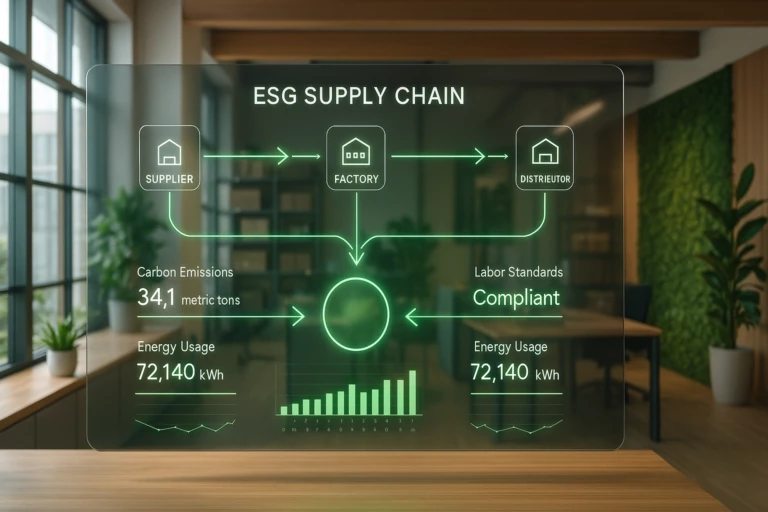
The ESG transformation is reshaping supply chains in 2025, becoming a strategic imperative for modern organizations. The CSRD, in force since January 2024, requires European companies to provide full transparency on their environmental and social impacts. This major regulatory shift is accompanied by new requirements such as the Carbon Border Adjustment Mechanism (CBAM) and the […]
Decarbonization in Construction: Challenges and Solutions for Managing Subcontractors and Craftsmen (Scope 3)
Decarbonization is now a major challenge for businesses and public stakeholders. In the Construction and Public Works (BTP) sector, this issue is central, as it is one of the largest emitters of greenhouse gases (GHG), responsible for 39% of the growth in energy-related carbon emissions. Scope 3 decarbonization in construction is particularly complex because, according […]