By 2026, TPRM comes a strategic enabler of value, resilience, and decision-making
By 2026, Third Party Risk Management (TPRM) is no longer a solution safeguard operating in the background which collects documents. It becomes a strategic business enabler, embedding governance, data, artificial intelligence, and collaboration directly into ERP and SRM ecosystems to secure value, resilience, and supplier-driven decision-making.
The 2026 Context: why TPRM moves to the core of business?
Supplier management has definitively moved beyond operational execution. Organizations now operate in an environment where supplier dependency is structural, risk exposure is systemic, and governance expectations are continuously rising. Especially since organisations tend to evaluate all suppliers as upper-tier suppliers. In this context, TPRM evolves from a control mechanism into a lever for performance, continuity, and trust.
Suppliers are increasingly strategic
Modern enterprises rely on extended ecosystems to innovate, scale, and deliver value. Strategic suppliers are no longer limited to tier-1 partners. Technology providers, subcontractors, data processors, logistics partners, and service providers all have a direct impact on operational continuity, regulatory exposure, and brand reputation. As a result, supplier risk is now inseparable from enterprise risk.
Supply chains have become risk concentrators
Geopolitical and climat instability, regulatory pressure, cyber threats, ESG obligations, and operational disruptions have transformed supply chains into complex and dynamic risk environments. Managing these risks can no longer rely on periodic assessments or siloed processes. It requires continuous visibility, shared data, and coordinated governance across procurement, risk, compliance, IT, legal, and finance.
Aprovall redefining TPRM at enterprise scale
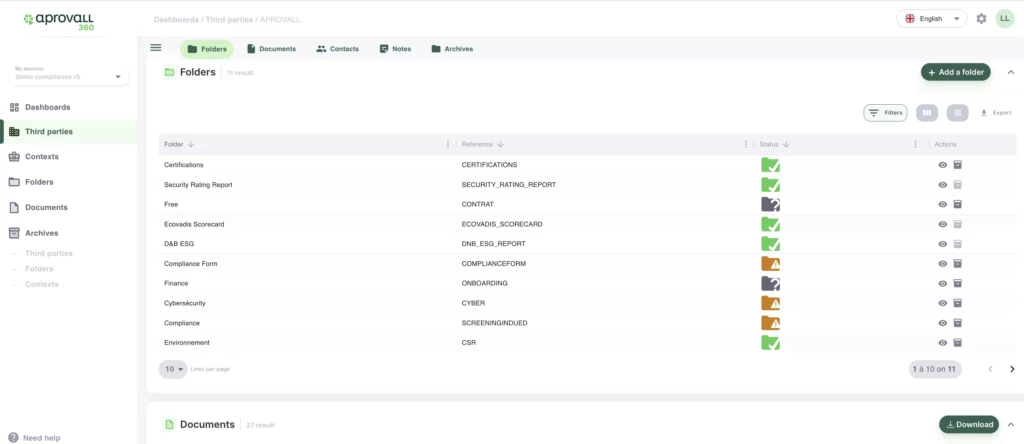
Aprovall works with leading French luxury groups to automate compliance tracking, audit readiness, and certification management—enabling effective, large-scale control of supplier-related risks
Source : Trend Report | Forrester | Empower Procurement To Build Resilient Supply Chains And Drive HighPerformance IT | Updated December 4, 2025 | By Jeffrey Rajamani, George Lawrie with Pascal Matzke, Lorenzo Annicchiarico
From cost optimization to value preservation
While cost optimization remains relevant, executive priorities are shifting toward value preservation. Organizations now focus on protecting revenue streams, securing operations, avoiding regulatory penalties, and safeguarding corporate reputation. TPRM plays a critical role by identifying weak signals early and enabling informed, risk-aware decisions before issues escalate.
The ease of use, the ability to meet both supplier and internal needs, and the capacity to share tools across an entire industry or group were key. Buyers saved significant time, supplier adoption was immediate, and completion rates exceeded 80% without intensive follow-ups.
Marc Menetrier
Purchasing Director | TAG Heuer
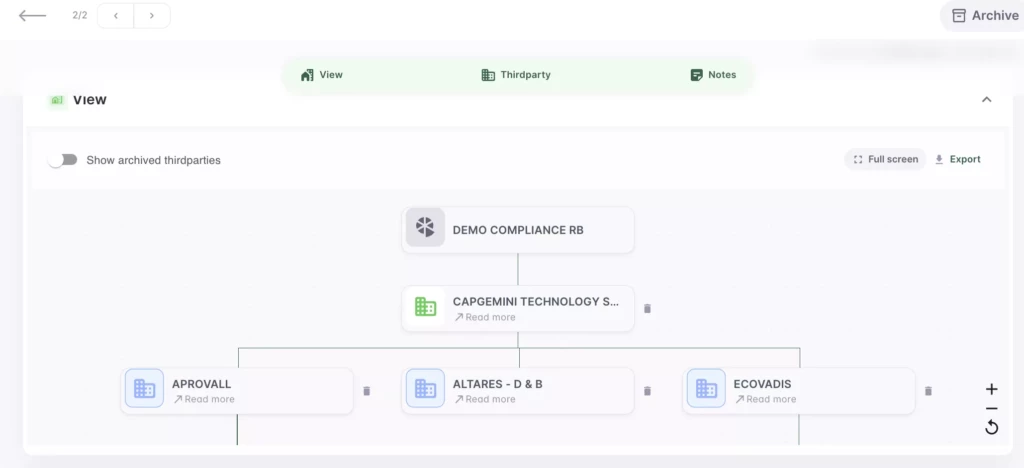
…Solutions like Aprovall provide us that 360-degree visibility into our extended enterprise, that we can see the variety of relationships, not just at the relationship level, but at the factories and contracts and service level agreements that make up those relationships. That allows us to see the impact on the organization, to be able to see what’s coming at the organization…
Michael Rasmussen
CEO | GRC20/20
Collaborative supply network platforms are becoming the standard
Rather than managing suppliers in isolation, organizations are adopting collaborative supply network and unique platforms. These platforms connect internal stakeholders and suppliers around shared standards, assessments, and continuous improvement plans. In ideal world, suppliers don’t pay the plateform which aims to facilitate exchange with organisations. They break down organizational silos and foster transparency across procurement, legal, risk, IT, and finance—transforming supplier relationships into structured partnerships.
AI and data power the next Generation of TPRM
Artificial intelligence accelerates assessments, enhances data analysis, detects anomalies, and enables predictive risk monitoring. AI-driven insights allow teams to shift focus from manual data collection to high-impact, value-generating actions.
Governance embedded in business decisions
Governance is no longer a separate layer. Supplier onboarding, sourcing strategies, contract renewals, and risk acceptance decisions now systematically integrate compliance, cybersecurity, ethics, sustainability, and resilience criteria. These dimensions converge into a single, unified decision framework, aligned with enterprise objectives.